Nissan Navara AdBlue Guide
Nissan Navara AdBlue Problems: Warning Light, Counter Reset & Fixes
Your Navara AdBlue warning is still on after filling. The tank is full, but the counter keeps counting down. Here is what is actually happening — and why the fix is rarely as simple as adding more fluid.
In This Guide
The Nissan Navara is one of the UK’s most popular pickups for trade and agricultural use, and since the D23 NP300 generation introduced AdBlue, owners have reported a consistent set of problems poorly covered by most repair guides — which focus almost entirely on panel vans. The Navara duty cycle is different: high towing loads, outdoor storage, seasonal low-mileage use, and extended idle periods all create AdBlue system conditions that do not apply to a Transit or Sprinter.
This guide covers the fault patterns specific to the Navara, why the warning so often refuses to clear even with a full tank, and what the real repair options are.
Why the Warning Light Stays On After Refilling
When a Navara owner refills the AdBlue tank and the warning light remains on, the instinct is to top up more. That usually does not help — and sometimes makes things worse. The reason is that most persistent warnings are sensor faults, not fluid level faults.
The AdBlue tank contains a level sensor that measures fluid depth by conductivity or float position. When AdBlue evaporates or gets disturbed during low-level driving, it leaves behind crystallised urea residue on the sensor. That residue insulates the sensor from the fluid around it, so even when the tank is refilled, the sensor continues to read low.
A less common but real cause is a faulty NOx sensor further down the exhaust. If the downstream NOx sensor reads emissions above the expected threshold after refill, the ECU keeps the AdBlue warning active regardless of tank level.
The Overfill Trap: How Too Much AdBlue Causes the Same Warning
This is the Navara problem most guides miss entirely. The level sensor in the AdBlue tank has both a minimum and a maximum detection range. If you fill the tank all the way to the filler cap, the fluid level exceeds the sensor upper reading point and the sensor stops registering correctly — it essentially loses the fluid above its range and reverts to a low or no-reading state.
The result is a dashboard warning that looks exactly like a low-fluid warning, even with a completely full tank.
The fix is counterintuitive: remove a small amount of AdBlue from the tank (typically one to two litres), then turn the ignition on without starting the engine for around 30 seconds to allow the ECU to re-read the sensor. If the tank was the problem, the warning should clear.
Nissan Navara-Specific Fault Patterns
Several issues appear consistently on Navara forums and in specialist diagnostics that are distinct from the common van AdBlue faults:
Level sensor crystallisation
The Navara tank design and agricultural and trade use pattern — where the vehicle often runs low before being refilled — creates ideal conditions for crystallisation on the sensor probe. The AdBlue sits at a very low level for extended periods, deposits build up, and refilling does not clear them. A replacement tank or sensor is often required. If you are also noticing a crystallisation smell or white residue around the filler cap, this confirms the pattern.
Dosing injector blockage
Navara owners who use the vehicle in dusty or agricultural environments sometimes see injector blockages from contaminated AdBlue. The symptom is a warning that returns shortly after a forced reset, with fault codes pointing to poor SCR efficiency rather than a tank level issue. If you are running AdBlue stored in bulk tanks outdoors, check the quality before assuming the vehicle is at fault.
Cold-weather no-start
In temperatures below minus 11 degrees Celsius, AdBlue freezes. The Navara tank has a heater, but if the heater element fails, the system cannot thaw the fluid and the SCR system throws faults. Owners in exposed locations who park overnight in winter should be aware of this.
No-Start Countdown: What Happens and When
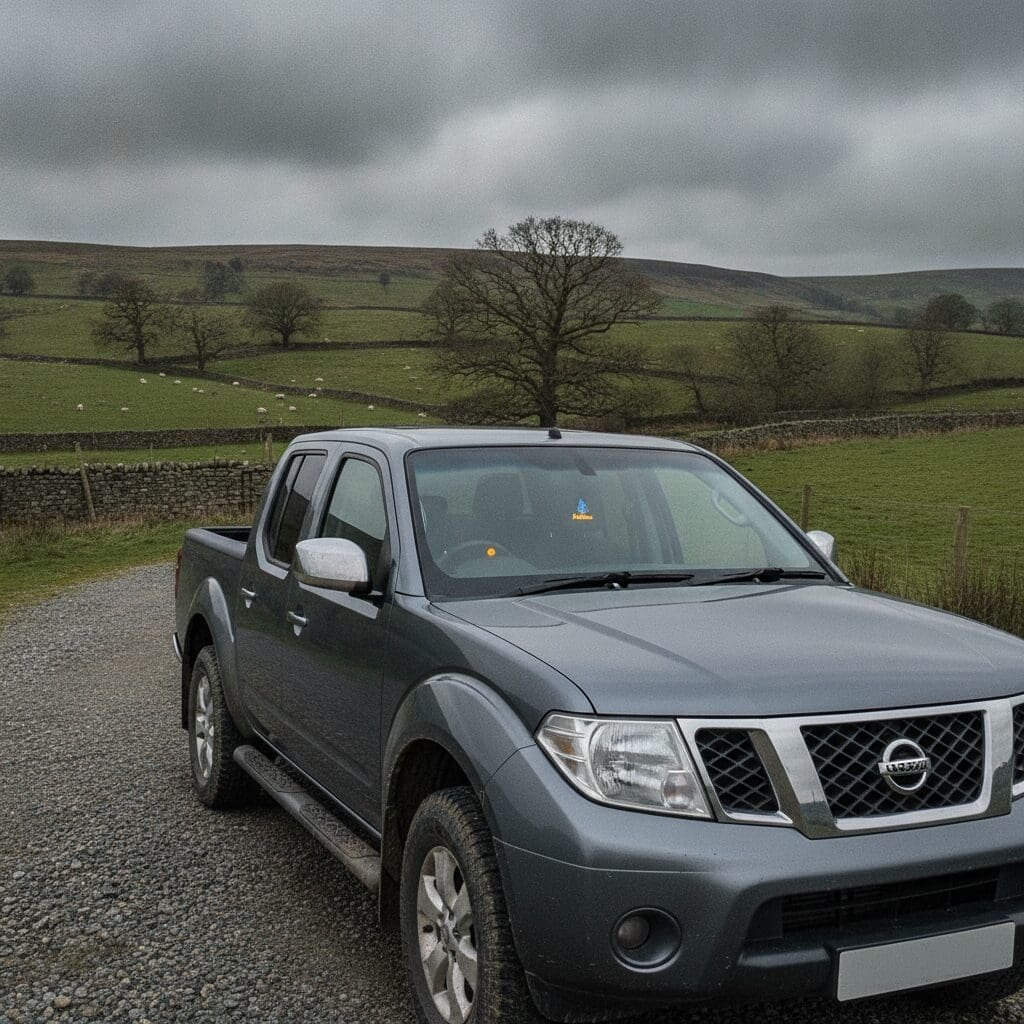
When the Navara ECU determines that AdBlue is critically low (or that the AdBlue system has a serious unresolved fault), it initiates a no-start counter — a countdown that ends with the engine being prevented from restarting once switched off.
The threshold is typically a warning at around 1,500 miles remaining, followed by increasing urgency, then a hard stop at zero. The key point Navara owners miss is that this counter can be triggered by a sensor fault, not just an empty tank. A vehicle with a full tank and a faulty level sensor can hit zero on the countdown and refuse to restart, because the ECU believes the tank is empty.
If you are at zero miles and the engine will not restart, adding AdBlue may not resolve it on its own. The system needs a diagnostic reset to confirm the fluid level is correct and clear the locked counter. Our guide to why the AdBlue warning stays on after refilling covers this process in more detail.
Fix Options: Sensor Reset, Repair or Delete
- Diagnostic reset: If the counter has been triggered by a sensor glitch or brief low-level event, a scan tool reset after confirming the tank is adequately filled often resolves it. This is the lowest-cost option and should be tried first.
- Sensor replacement: If the level sensor is crystallised or failed, it needs replacing. On the D23 Navara this usually involves dropping the AdBlue tank — a workshop job.
- SCR system repair: If the fault is in the dosing injector, pump, or NOx sensor, these components need testing individually.
- AdBlue delete: For working pickups where ongoing SCR faults are costing time and money, a software-based AdBlue delete removes the system from the ECU map permanently. This is a one-time fix that eliminates all future AdBlue-related faults on that vehicle.
Typical Repair Costs
| Repair | Typical Cost (UK 2026) | Notes |
|---|---|---|
| Diagnostic scan + reset | £80–£150 | First step; confirms what is actually wrong |
| Level sensor replacement | £200–£450 | Parts + labour; tank access required |
| NOx sensor replacement | £250–£500 | Adaptation via scan tool needed after fit |
| Dosing injector replacement | £300–£600 | Labour-intensive on some Navara variants |
| AdBlue delete | £250–£400 | One-time; eliminates all future SCR faults |
Mobile specialists like iFix AdBlue typically charge less than main dealers because there is no workshop overhead — the diagnostics and repair come to you.
Navara AdBlue Warning Will Not Clear?
We come to you across Leicester, Loughborough, the Midlands and beyond. Mobile diagnostics, sensor resets, and permanent AdBlue delete — all at your home, farm, or workplace.
Frequently Asked Questions
Why will not the AdBlue warning reset on my Nissan Navara after refilling?
The most common cause is a crystallised level sensor inside the AdBlue tank. When AdBlue dries on the sensor, it reads incorrectly even when the tank is full. Overfilling the tank (past the sensor detection range) also prevents it from reading correctly. A diagnostic scan confirms which component has failed. Simply adding more AdBlue rarely resolves either problem.
What happens when a Nissan Navara AdBlue counter reaches zero?
When the countdown reaches zero the Navara will not restart once the engine is switched off. You need to add AdBlue — and in most cases get a diagnostic reset — before it can start again. If the fault is sensor-based rather than actual fluid level, topping up alone will not clear the no-start lock.
Can you overfill AdBlue on a Nissan Navara?
Yes. When the tank is filled past the sensor upper detection point, the sensor stops reading and the dashboard shows a low-level warning despite a full tank. The fix is to siphon out one to two litres and then cycle the ignition (without starting the engine) for around 30 seconds. If the warning clears, overfilling was the cause.
Does the Navara need a 50-mile drive to reset the AdBlue warning?
No. The 50-mile recalibration drive is a persistent forum myth. After a genuine refill the system should update relatively quickly. If the warning persists after refilling and a short drive, you have a fault — not an incomplete calibration cycle. Continuing to drive hoping it resolves is likely to trigger the no-start countdown.