Emissions Explained · Euro 6 & SCR
Do All Diesels Use AdBlue? Euro 6, SCR and How to Tell If Your Van Has It
Not every diesel uses AdBlue, and not every Euro 6 diesel does either. Whether yours does comes down to which emissions technology the manufacturer chose to meet the rules. Here is how that choice was made, and how to check your own van in a couple of minutes.
No. Only diesels fitted with selective catalytic reduction (SCR) use AdBlue. Euro 6 set a NOx limit, not a technology, so manufacturers met it with SCR, a lean NOx trap or exhaust gas recirculation alone. Do all diesels use AdBlue? If yours has a blue filler cap, an AdBlue gauge or an SCR warning, it does.
Here is the fact most explanations skip. When the International Council on Clean Transportation analysed independent tests of 32 Euro 6 diesel cars, 11 used SCR, 16 used a lean NOx trap and 5 relied on exhaust gas recirculation. Fewer than half of that group needed AdBlue at all. So “it’s a Euro 6 diesel, so it must have AdBlue” is a guess, not a rule.
That matters when you are buying a van, budgeting for running costs, or trying to work out what a warning light on the dash actually refers to. It also matters when a seller or a forum post tells you something about “your engine” that may only apply to a different version of it.
What Euro 6 actually requires
Euro standards set limits on what comes out of the exhaust, chiefly nitrogen oxides (NOx) and particulate matter. They do not tell a manufacturer which hardware to fit. That is why two diesels meeting the same standard can have completely different systems underneath.
Transport for London’s summary of the rules sets out the dates: Euro 6 became mandatory for new heavy-duty engines from January 2014, for cars and light vans from September 2015, and for larger vans up to 3.5 tonnes from September 2016. TfL also notes that some Euro 6 vans have been available since 2013, ahead of the deadline.
So a large panel van registered in early 2016 may be Euro 5 or Euro 6, depending on when that model was approved. The registration date narrows it down; it does not settle it.
Stop asking “is it Euro 6?” and start asking “does it have SCR?”. The first tells you whether it meets a standard. The second tells you whether you will be buying AdBlue, and whether an AdBlue fault can ever put the vehicle into a no-start countdown.
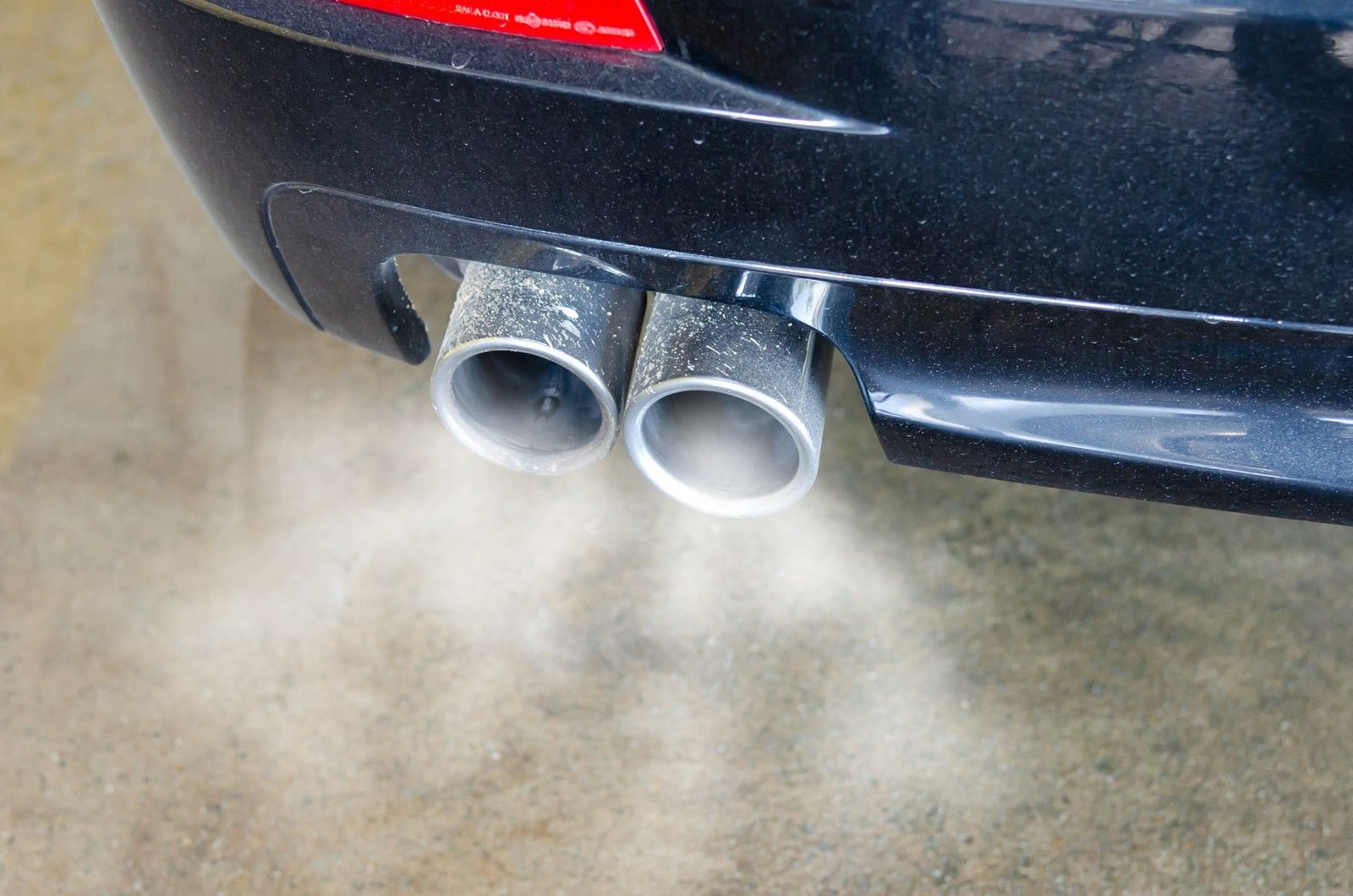
Do all diesels use AdBlue? Three ways to meet the NOx limit
Every modern diesel controls NOx, but there are three main ways to do it. Most vehicles use a combination, with one doing the heavy lifting.
| Technology | How it cuts NOx | Uses AdBlue? |
|---|---|---|
| Exhaust gas recirculation (EGR) | Feeds some exhaust back into the intake to lower combustion temperature, so less NOx forms in the first place | No |
| Lean NOx trap (LNT) | Stores NOx in a catalyst, then periodically runs slightly rich to release it and convert it to nitrogen | No |
| Selective catalytic reduction (SCR) | Injects a urea solution into the exhaust, which breaks down into ammonia and converts NOx to nitrogen and water over a catalyst | Yes |
The Association for Emissions Control by Catalyst, whose members make these systems, described SCR and lean NOx traps in 2015 as the two mainstream technologies, about equally distributed on Euro 6b diesels. The same paper notes that SCR was already fitted to most new heavy-duty diesel engines in Europe, and to a growing number of light-duty vehicles and cars.
In practical terms, SCR tends to suit heavier, harder-working diesels, because it keeps working well under load once the exhaust is hot. That is one reason AdBlue is so common on vans, pickups and larger cars, and less common on small cars.
How the AdBlue (SCR) system works, briefly
If your vehicle does use AdBlue, it carries a separate tank, usually with its own filler next to the diesel filler or in the boot or under the bonnet. From there, the system:
- Pumps the fluid from the tank to a dosing injector in the exhaust, building and holding pressure.
- Heats it when needed, because AdBlue freezes in cold weather and the tank, lines and pump have heaters to keep it moving.
- Doses it into the hot exhaust ahead of the SCR catalyst, where it turns into ammonia.
- Measures the result with NOx sensors before and after the catalyst, so the engine control unit can check the system is doing its job.
That last step is the one drivers notice. If the readings say NOx is not being reduced enough, the system logs a fault, puts up a warning and, if it is left, begins a countdown to a restart block. Our guide to what a NOx sensor actually does explains why those sensors are so often blamed for faults that start somewhere else.
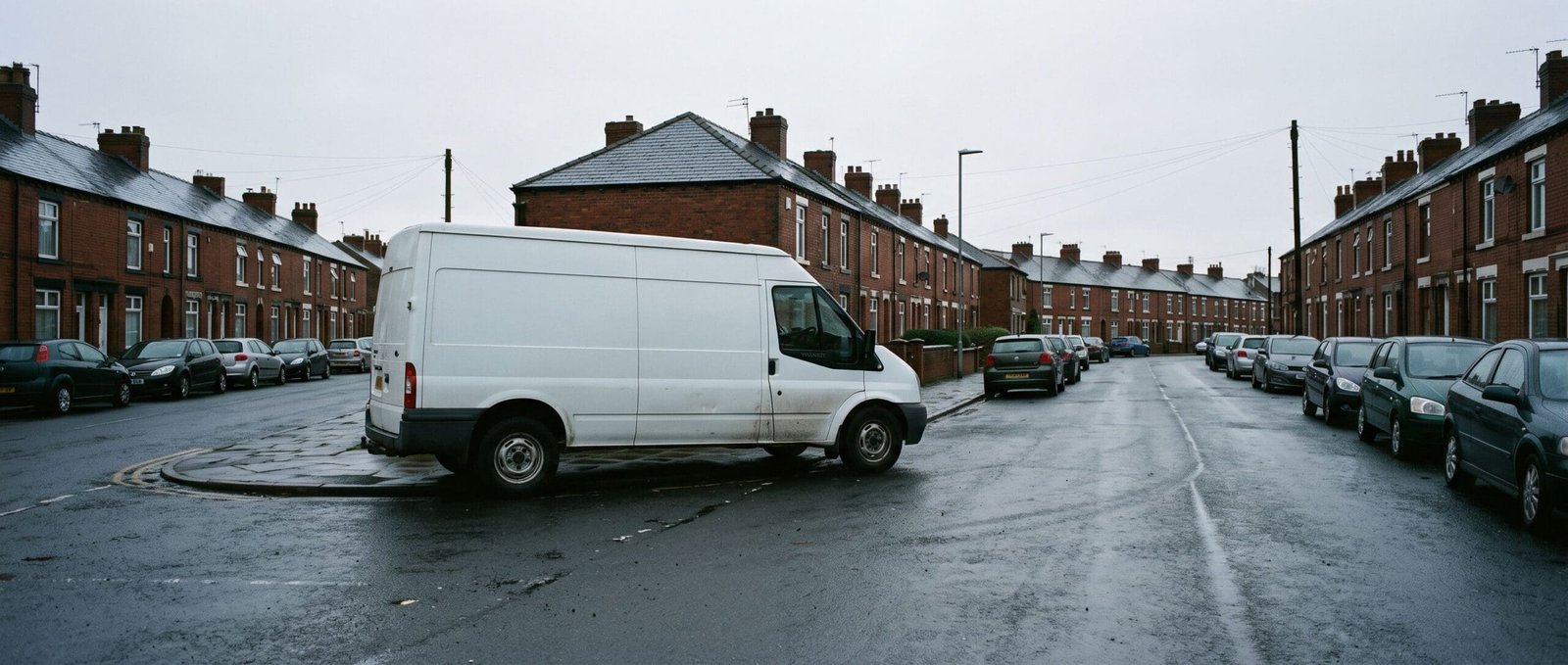
How to tell if your van uses AdBlue
You do not need a scan tool for this. Work down the list; the first two are usually enough.
- Look for a blue filler cap. AdBlue tanks have their own, usually blue, filler marked “AdBlue” or “DEF”. Check next to the diesel filler first, then the boot floor, then under the bonnet.
- Look at the dashboard. Vehicles with SCR normally show an AdBlue level or range, or have an AdBlue section in the menu.
- Check the handbook. If AdBlue is used, there will be a section on refilling it, and usually a stated tank capacity.
- Check the V5C. On newer vehicles the Euro standard may be listed in section D.2 of the log book. It confirms the standard, though not the technology.
- Ask for the full vehicle specification from a dealer using the VIN, if none of the above is conclusive.
Engine names with “Blue” in them are a hint, not proof. The same badge can cover different engines and emissions systems across model years and markets, and a van with the same name as yours may not have the same hardware underneath.
Why the same model can go either way
This is where people get caught out. A model name can run for years across several emissions standards. An earlier Euro 5 version of a van may have no AdBlue system at all, while the Euro 6 version that replaced it does. Even within Euro 6, a manufacturer can change approach between updates.
Euro 6 itself was tightened in stages. The NOx limit stayed the same, but the way it is tested changed, finishing with checks on the road as well as in the lab. Manufacturers often changed their hardware between those stages, so a van from one year can differ from the same van a year or two later.
The result is that advice written about “the 2.0 diesel” in your model can be accurate for one version and wrong for yours. If a fault guide doesn’t match what you can see on your own vehicle, trust the vehicle.
Why it matters to you
Running costs
An SCR vehicle needs AdBlue topping up between services, and its system has extra parts that can fail: the pump, heaters, injector, level sensor and NOx sensors. A non-SCR diesel avoids those costs, but carries its own, such as lean NOx trap regenerations or a busier EGR system.
ULEZ and clean air zones
London’s ULEZ is enforced on the vehicle’s declared emissions rather than its age, and the diesel minimum is Euro 6, so a Euro 6 diesel qualifies whether or not it uses AdBlue. What changes is what keeps it compliant in practice: on an SCR vehicle, the system has to be working.
Warning lights and no-start countdowns
Only SCR vehicles have AdBlue warnings and the restart countdown that comes with an unresolved AdBlue fault. If you are seeing one, your vehicle uses AdBlue, whatever anyone has told you. Our explainer on how the AdBlue no-start countdown works covers what the numbers mean and how long you have.
What is coming next
Newer rules are pushing in the same direction, with closer monitoring of emissions over the vehicle’s life. We cover what that means for vans in our guide to Euro 7 and the SCR and AdBlue rules in the UK.
If your van does use AdBlue
An SCR system is reliable when it is looked after, and the basics are simple. Use fresh AdBlue from a sealed container or a clean pump. Never put anything else in the tank. Do not let it run empty. Get a warning looked at early, while it is still a warning and not a countdown.
When a fault does appear, the useful question is which part of the system has failed, not just which light is on. A low-pressure code, a heater fault and a NOx efficiency fault can all produce the same dashboard message. Testing the system as a whole is what stops the wrong part being bought. Our SCR system repair service starts with exactly that.
AdBlue Warning on Your Van?
iFixAdBlue covers Leicester, Leicestershire and the Midlands. We come to you, test the whole SCR system, and tell you which part has actually failed before anything is ordered.
Frequently Asked Questions
Do all Euro 6 diesels have AdBlue?
No. Euro 6 sets emissions limits, not the technology used to meet them. Many Euro 6 diesels use SCR and AdBlue, but others use a lean NOx trap or rely on exhaust gas recirculation, and those do not need AdBlue.
How do I know if my diesel needs AdBlue?
Look for a separate filler cap, usually blue and marked AdBlue, near the fuel filler, in the boot or under the bonnet. An AdBlue level or range display on the dashboard, or a refilling section in the handbook, also confirms it.
What happens if a diesel that needs AdBlue runs out?
You get warnings first, then a countdown. If the tank is left empty, the vehicle is designed to prevent restarting once the countdown reaches zero. Refilling with enough AdBlue normally clears it, but a fault in the system will not clear with a top-up.
What year did diesels start using AdBlue?
There is no single year. SCR was used on heavy diesels before it was common on vans and cars, and it spread as Euro 6 arrived: September 2015 for cars and light vans and September 2016 for larger vans up to 3.5 tonnes. Even then, not every model used it.