Buying used • AdBlue • SCR checks • Pre-purchase
Buying a Used Van with AdBlue: How to Check the SCR System Before You Pay
A clean dashboard proves almost nothing on a Euro 6 van.
Here are the four checks that actually tell you what you are buying.
Mobile across Leicester, Loughborough & the wider Midlands • Mon–Sun 09:00–20:00
The MOT test does not open a Euro 6 van’s ECU. The DVSA inspection manual tells testers to check only the emissions components that are visible and identifiable — catalysts, particulate filters, EGR valves and selective catalytic reduction valves. Software is out of scope. That single sentence is why buying a used van with AdBlue is different from buying a used petrol car, and why a fresh MOT certificate is not the reassurance most buyers think it is.
The short answer
To check a used van’s AdBlue system before you buy, do four things: read the full MOT history for emissions advisories, inspect the AdBlue filler and visible SCR hardware, watch the dashboard through a genuine cold start, and run an OBD scan for stored, pending and permanent fault codes. Only the scan is conclusive.
Why the AdBlue System Is the Biggest Hidden Cost on a Used Van
On a van with 90,000 miles behind it, the clutch, the turbo and the injectors are all things a buyer thinks to ask about. The SCR system usually is not, because it makes no noise, changes nothing about how the van drives, and gives no warning at all until it decides to.
Then it gives you every warning at once. A NOx sensor drifts out of tolerance, the ECU logs it across a handful of drive cycles, and the van goes from perfect to a countdown display in under a week. If you bought it three weeks earlier, that is now entirely your problem.
There is a second, quieter risk. Some used vans reach the market with the SCR system already switched off in software. Sometimes the seller knows and does not say. Sometimes the seller genuinely does not know, because they bought it that way. Either way, the use of defeat devices that reduce the effectiveness of emission control systems is prohibited under the emissions regulation that governs Euro 5 and Euro 6 vehicles, and the vehicle in your name is the one that has to answer for it.
Here is the part most buying guides skip: none of the checks below take more than about twenty minutes, and three of them are free. The reason people skip them is not cost. It is that nobody tells them what to look at.
Check 1: Read the Full MOT History, Not Just the Certificate
The certificate on the dashboard tells you the van passed on one day. The free DVSA MOT history service tells you what every tester has said about it for years, including advisories that never became failures. You only need the registration and, for the full record, the V5C document reference.
What you are hunting for is a pattern rather than a single line. Read the record backwards and note anything in these categories:
Emissions advisories
Repeated notes about smoke, emissions equipment or the engine malfunction indicator lamp. One is noise. Three across three tests is a system that has been struggling for years.
MIL and warning lamp entries
A tester recording that the engine warning light was on or inoperative is recording the exact symptom an active SCR fault produces.
Mileage that stops moving
A van that covered 25,000 miles a year and then did 3,000 has often been parked because of something. Low use is also its own AdBlue risk.
A very recent test
An MOT done days before sale is not suspicious on its own, but it does mean the certificate tells you about that week, not that year.
A van with a long, boring MOT record and no emissions notes is genuinely good news. A van whose record is full of them has already told you where the money is going to go. If you want the vocabulary for what you are reading, our complete AdBlue fault code reference maps the common codes to the parts that cause them.
Check 2: The Physical Inspection — What Ten Minutes and a Torch Will Tell You
This is the check the MOT tester is actually doing, so it is worth doing it yourself and to the same standard. The DVSA manual is blunt about the threshold: emission control equipment fitted by the manufacturer that is missing, obviously modified or obviously defective is a Major defect, which means a fail.
Start at the filler. Most vans have a blue AdBlue cap either alongside the diesel filler or under the bonnet. Look at the cap and the neck rather than just confirming they exist.
- White crust around the filler neck or on the ground beneath the tank is crystallised urea. It means fluid has been escaping somewhere it should not.
- A cap that will not seat properly, or an aftermarket cap, suggests the neck has been damaged or the tank has been out.
- A bone-dry, dusty filler on a van the seller says is in daily use is worth a direct question. AdBlue gets used.
Then get underneath with a torch. You are looking at the exhaust run between the DPF and the rear silencer, where the SCR catalyst and the dosing injector live. Fresh weld beads on an otherwise weathered exhaust, a blanking plug where a sensor should be, a NOx sensor with its plug hanging loose, or wiring that has been cut and rejoined outside a factory connector are all things that need explaining before money changes hands.
What a clean underside does not prove
A software-only delete leaves the hardware exactly where the factory put it. Everything looks right because everything is right — it is simply no longer being asked to work. This is precisely why the physical check cannot be the last one you do.
Check 3: The Cold Start and the First Two Minutes
Ask the seller not to run the van before you arrive. A warm engine hides a lot, and on an SCR system it hides more than most, because several of the self-checks only run from cold.
Turn the ignition to position two without starting, and watch the cluster carefully. Every warning lamp the van has should illuminate, then go out. A bulb that never lights is a bulb that cannot warn you, and on a van being prepared for sale that is not always an accident.
Then start it and leave it idling while you read the driver information display end to end. Scroll every menu, including any AdBlue range or level readout. A van with a healthy system will show a sensible remaining range. A van that shows nothing at all where a range should be is worth asking about.
Finally, drive it properly — twenty minutes including a sustained run at 50mph or more, not a lap of the estate. Many SCR monitors need heat and time before they will complete. A fault that is present but not yet confirmed will often surface on exactly that kind of drive, which is why the test drive matters more here than the walk-round. If a warning does appear, our guide to why an AdBlue warning stays on after filling explains what separates a level warning from a system fault.
Check 4: The OBD Scan — The Only Check That Settles It
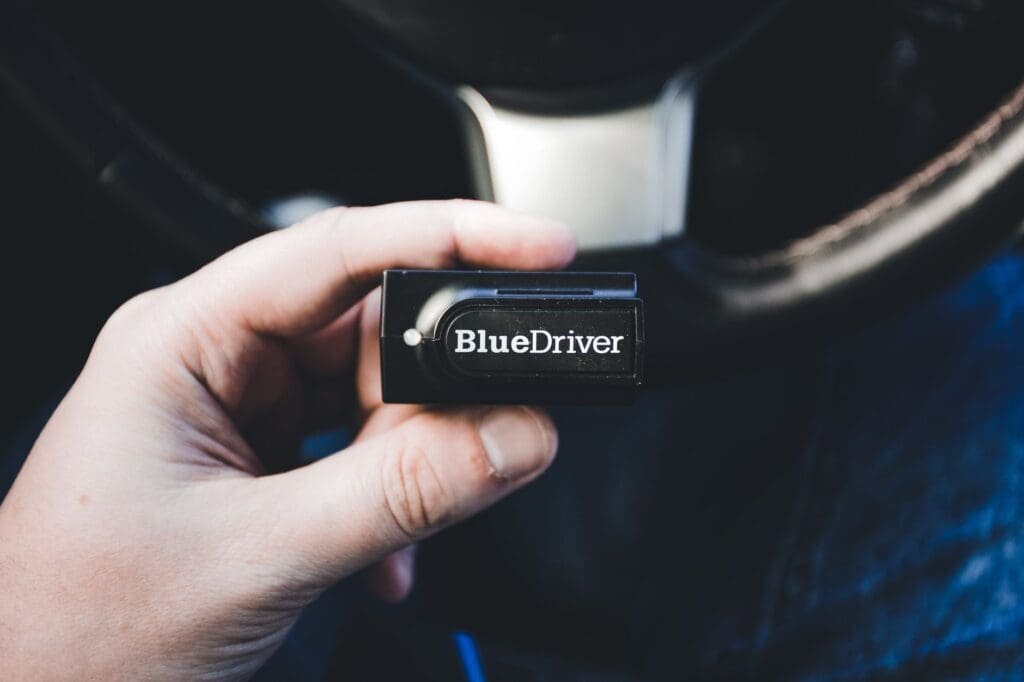
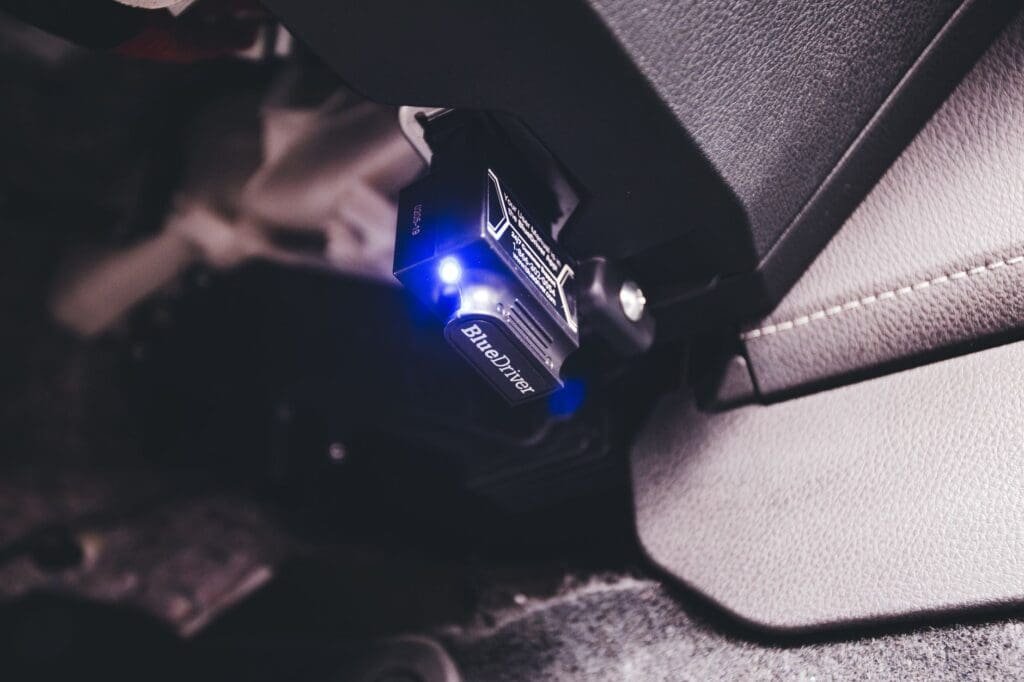
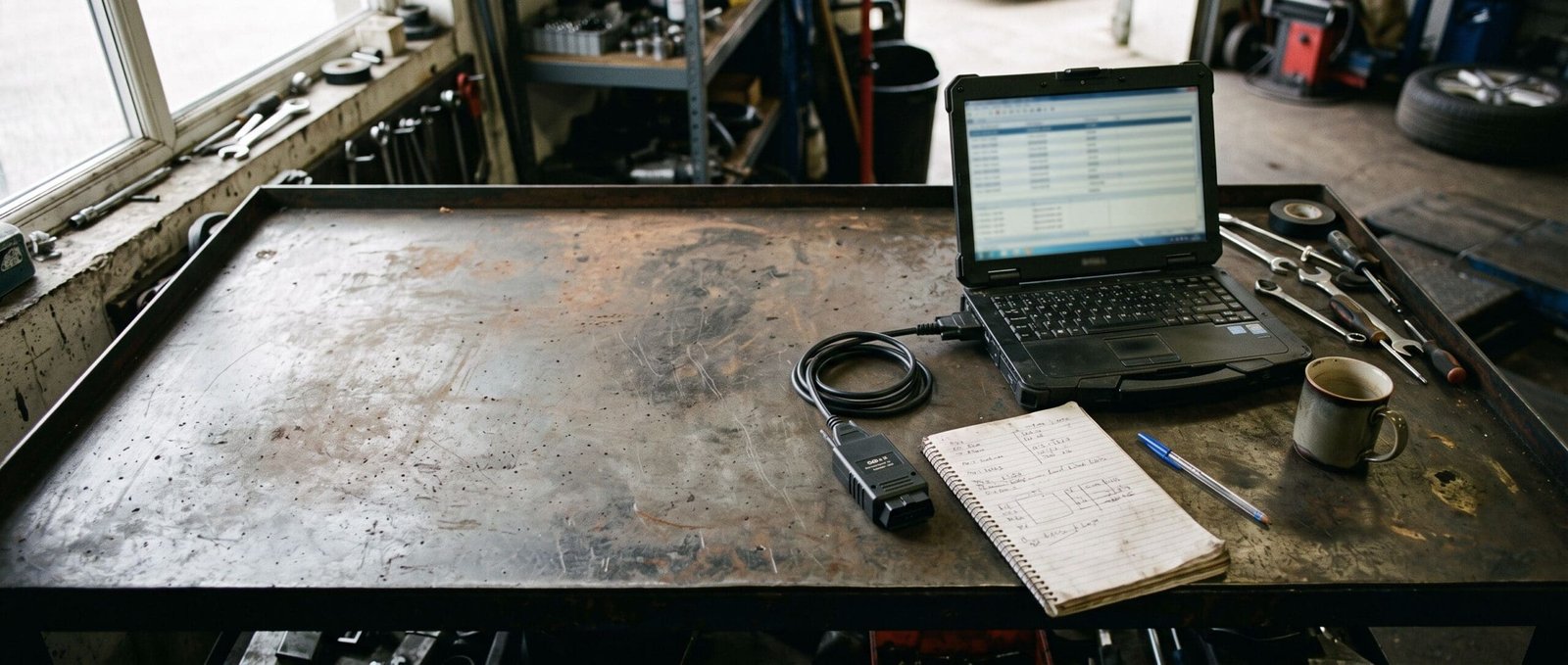
Everything above narrows the odds. Only a scan answers the question. Plug in before you buy, and be aware that a basic code reader is not enough — it will show you stored codes and nothing else, and stored codes are the easiest thing in the world to clear on the morning of a viewing.
A proper scan looks at four things a cheap reader will not show you:
Readiness monitors
If the emissions monitors read “not ready” on a van that has supposedly been driven all week, the ECU was cleared recently. That is a timing question worth asking out loud.
Pending and permanent codes
Permanent codes cannot be cleared with a scan tool. They clear themselves only once the ECU has confirmed the fault is genuinely gone. They are the closest thing to an honest history.
Live SCR data
Upstream and downstream NOx readings, dosing quantity and reductant pressure. On a working system these move. Values frozen at a default figure are a strong signal the system is not being asked to run.
Freeze frame
The conditions recorded when a fault was logged — mileage, temperature, load. It tells you whether a fault happened once in a cold snap or happens every week.
This is where a software delete finally shows itself. The hardware is present, the dashboard is clean, and the live data says the dosing system has not injected anything. That combination is not ambiguous.
What to Do If You Find a Fault — or a Delete
Finding something is not automatically a reason to walk away. It is a reason to know what you are negotiating about, and the two situations are genuinely different.
An active fault on an otherwise standard system is a repair with a known shape. A NOx sensor, a dosing injector, a pressure sensor and a full pump assembly are four very different bills, and a scan usually tells you which conversation you are having. Our breakdown of NOx sensor failure and replacement covers the most common of the four.
A system that has been switched off in software is a different decision, and an honest one to face before you buy rather than after. The van is not in the condition its emissions type approval describes, that is not something a new keeper can undo by ignoring it, and it affects resale to anyone who checks as carefully as you just did.
Either way, get it looked at by someone who works on these systems every day rather than someone who sees one a month. iFixAdBlue runs mobile SCR and AdBlue diagnostics across Leicester, Loughborough and the surrounding Midlands, including pre-purchase checks at the seller’s address. We will tell you what is stored, what is live, and what it means — before you commit.
FAQs: Checking AdBlue on a Used Van
Can you tell if AdBlue has been deleted without a scan?
Not reliably. A software delete leaves every component in place and the dashboard clear, so a walk-round and a test drive can both come back clean. Missing hardware, cut wiring or a blanked sensor will show on inspection, but the software-only version needs live data to expose.
Does a deleted AdBlue system fail an MOT?
It fails if the tester can see it. The DVSA manual makes manufacturer-fitted emission control equipment that is missing, obviously modified or obviously defective a Major defect. Testers are not required to interrogate the ECU, so a software-only delete can pass a test while still leaving the vehicle outside the emissions rules.
Should I still buy a van with an AdBlue warning light on?
Only with a diagnosis in hand. The same warning can mean a low tank, a failed sensor or a pump on its way out, and those are not comparable bills. Get it scanned first, then decide — a known fault is a negotiating position, an unknown one is a gamble.
Are low-mileage vans safer for AdBlue?
Not necessarily. Short journeys and long periods standing are their own risk, because the system never gets hot enough to clear deposits and AdBlue degrades in a part-full tank. A van that has done steady motorway miles is often in better SCR health than one that has barely moved.
Written by the iFixAdBlue technical team
Mobile AdBlue and SCR specialists working on Euro 5 and Euro 6 diesel vans and cars across Leicester, Loughborough and the wider Midlands. Everything above comes from vehicles we diagnose on the driveway, week in, week out.
Published 6 October 2026 • Last updated 6 October 2026
Viewing a Van This Week? Get It Scanned First.
Mobile pre-purchase AdBlue and SCR checks across Leicester, Loughborough and the Midlands. We come to the seller, read the live data, and tell you straight.