Diagnostics Guide · AdBlue Faults
AdBlue Light On but No Fault Codes? What Your OBD Reader Cannot See
A clean scan is one of the most misleading results in diesel diagnostics. The reader says no faults, the dashboard says otherwise, and the driver is left assuming the warning is a glitch. It almost never is.
If the AdBlue light is on but no fault codes appear, the fault is almost always stored somewhere your reader cannot reach. Budget OBD readers only query generic emissions codes on the engine ECU. AdBlue faults commonly sit in the SCR or dosing control module, or as a manufacturer-specific code the reader will not request.
In This Guide
- Why a Clean Scan Does Not Mean a Clean System
- A Dash Message Is Not the Same as a Stored Code
- Where AdBlue Faults Actually Get Stored
- Five Reasons Your Reader Comes Back Empty
- What a Generic Reader Sees vs What We See
- What a “No Codes” Warning Means for Your MOT
- What to Do Instead of Buying a Bigger Reader
- FAQs
Why a Clean Scan Does Not Mean a Clean System
Here is the thing most guides get wrong. They treat “no fault codes” as a diagnostic result. It is not a result at all — it is the absence of one, and on an SCR system the absence of an answer is usually a limitation of the tool rather than a verdict on the vehicle.
A twenty-pound plug-in reader is built to do one job well: return the standardised, emissions-related powertrain codes that every vehicle sold in the UK has to expose through the OBD port. That standard was written so that any tester anywhere could confirm a car was not obviously polluting. It was never written to give you the full internal picture of a modern selective catalytic reduction system.
So the reader asks a narrow question, gets a narrow answer, and reports nothing. Meanwhile the vehicle is showing you a warning it would not raise without a reason.
A clean generic scan rules out one thing only: a generic, stored, emissions-related engine code. It does not rule out an SCR fault, a dosing fault, a quality fault, a counter that has already started, or a fault logged in a module your reader never spoke to.
A Dash Message Is Not the Same as a Stored Code
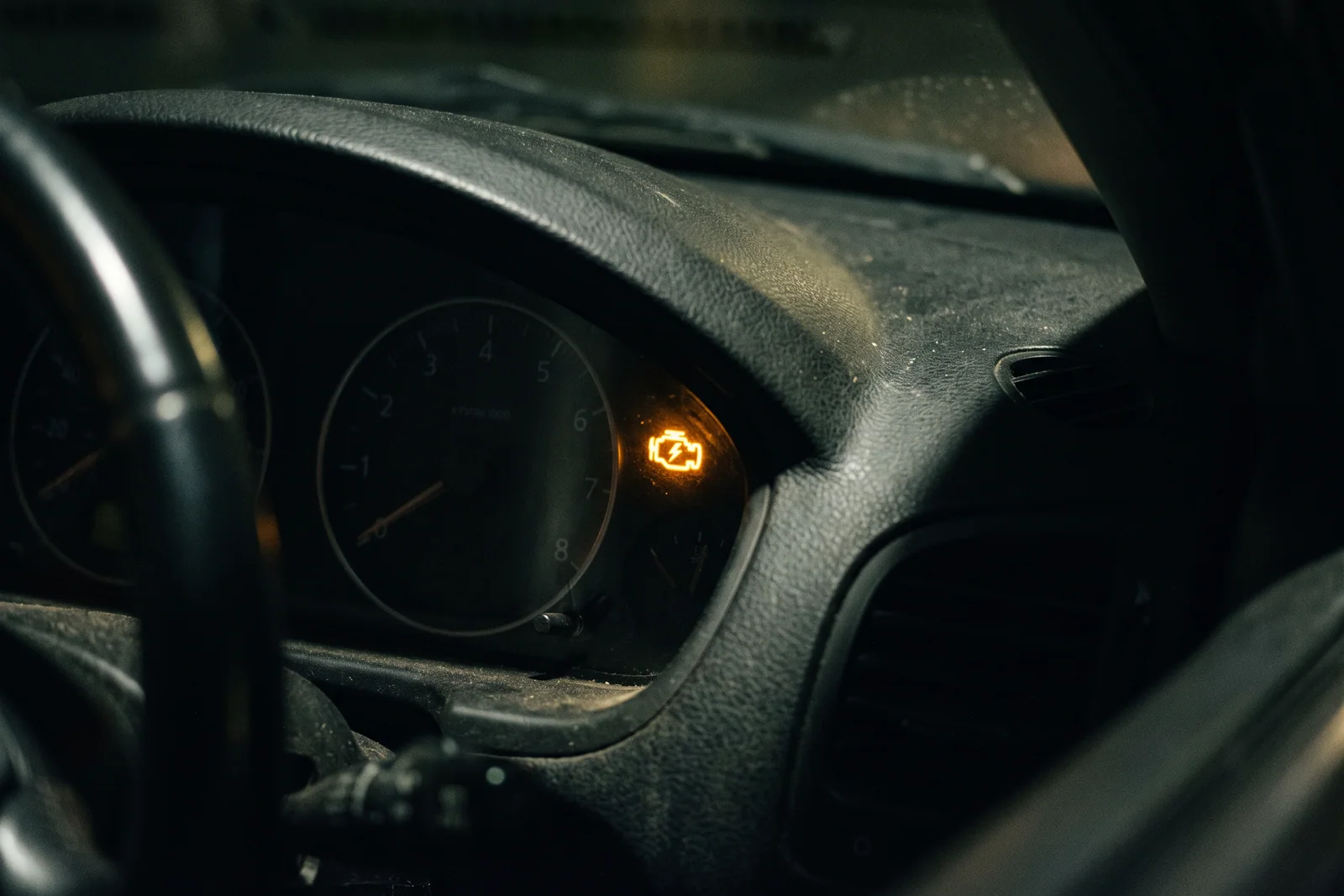
This trips up a lot of people, so it is worth separating properly. Vehicles raise three different kinds of signal, and only one of them is guaranteed to be a code your reader can pull.
- A driver information message. “Refill AdBlue”, “Emissions fault — see handbook”, “Engine start prevented in 800 miles”. These are generated by the instrument cluster from a status flag, not necessarily from a stored diagnostic trouble code.
- A pending or intermittent code. The system has seen something wrong once, but has not yet seen it enough times across enough drive cycles to promote it to a confirmed fault. Many cheap readers only request confirmed codes.
- A confirmed stored code. The one a generic reader will actually show you — and only then if it lives in the module the reader queried.
A vehicle counting down to a no-start is, from the reader’s point of view, often working perfectly. The countdown is the system doing exactly what it was designed to do. There is no engine fault to report, so nothing is reported.
Plenty of readers offer an “erase codes” button that will happily wipe pending data and freeze-frame information. That is the evidence a proper diagnosis is built from. Clearing it does not reset an AdBlue counter and usually just makes the next diagnosis slower and more expensive.
Where AdBlue Faults Actually Get Stored
On most modern diesels the AdBlue system is not simply “part of the engine ECU”. Dosing, tank level, tank heating, fluid quality and the NOx sensor readings are handled by a dedicated control unit — often called the SCR module, DCU or reductant control module — sitting on the vehicle’s internal network.
Your reader plugs into a socket, but that socket is a doorway to a network, not a direct line to every module on it. Generic tools typically talk to the engine ECU and stop there. If the SCR module holds the fault, nobody asked it.
Add to that the manufacturer-specific code space. Codes beginning P1, and a great many of the P20xx and P22xx family in their manufacturer-defined form, are only meaningful to a tool that carries the right definitions. A generic reader may see a number it has no description for, and simply not display it. We cover the ones we see most often in our AdBlue fault codes master list.
Five Reasons Your Reader Comes Back Empty
These are the five we run into most, roughly in order of how often they turn out to be the answer.
- The fault is in the SCR or dosing module, not the engine ECU. The single most common explanation. The tool never queried the module holding the data.
- The code is manufacturer-specific. Present, readable by the right tool, invisible to a generic one with no definition for it.
- It is a status or counter, not a fault. An inducement countdown, a failed quality check or a dosing adaptation drifting out of range can drive a dash warning without ever setting a confirmed DTC.
- Somebody already cleared it. A garage, a previous owner or the driver erased the codes. The warning returns on the next drive cycle because the underlying condition is still there, but the history is gone.
- It is intermittent and currently passing. A corroded connector or a chafed wire that only misbehaves when warm, wet or vibrating. Scan it cold in a driveway and everything looks fine. This is where live data matters far more than stored codes.
If your warning came back shortly after a top-up rather than out of nowhere, start with our guide to an AdBlue warning light that stays on after filling, which covers the level-sensor side of this specifically.

What a Generic Reader Sees vs What We See
The gap is not about one tool being more expensive. It is about which modules get asked, and which questions are available to ask.
| Capability | Generic OBD reader | Manufacturer-level diagnostics |
|---|---|---|
| Modules queried | Engine ECU, usually only | Every module on the network, including SCR/dosing |
| Code coverage | Standardised emissions codes | Standardised plus manufacturer-specific |
| Pending and history data | Often not requested | Pending, permanent and freeze-frame |
| Live SCR values | Rarely, and rarely the useful ones | Dosing pressure, tank level and temperature, NOx values |
| Counter and inducement state | Not visible | Visible, with remaining distance |
| Actuator tests and adaptations | None | Pump priming, injector tests, sensor adaptation |
That last row is the commercial reality of the whole thing. Even when a generic reader does find the code, it cannot carry out the routine that finishes the repair — which is why a replaced part on its own so often leaves the light exactly where it was.
What a “No Codes” Warning Means for Your MOT
People assume that if nothing is stored, nothing can fail. Not quite. The MOT does not read your codes at all — it looks at the lamp.
For diesels first used on or after 1 July 2008, DVSA’s inspection manual lists an engine malfunction indicator lamp that is inoperative or indicating a malfunction as a Major defect. Major means a fail. Whether your reader could see a code has nothing to do with it.
There is a genuine surprise in the same manual, though, and it is worth knowing. A leak of the fluid required for selective catalytic reduction is not in itself a reason for failure. So an AdBlue weep does not fail the test by being a leak — but if it has caused a fault that lit the MIL, the lamp does.
Booking an MOT in the hope that a warning with no codes behind it will slip through is a false economy. If the lamp is lit, plan on a retest. Diagnose it first and you often walk into the test with nothing outstanding.
What to Do Instead of Buying a Bigger Reader
The instinct after a clean scan is to buy a better scanner. Occasionally that works. More often you spend real money on a tool that reaches one module further and still cannot run the routine the repair needs.
A more useful sequence, in order:
- Write down the exact dash wording and whether a distance or countdown is shown. That single detail separates an inducement from a component fault before anyone opens a bonnet.
- Note when it appears. From cold, after a motorway run, only when wet, only after refuelling. Intermittent patterns are diagnostic gold and cost nothing to record.
- Do not keep adding fluid. If the tank is genuinely full, more fluid solves nothing and overfilling can upset the level sensor.
- Leave the codes alone. Even the ones you can see. They are evidence.
- Get the SCR module read properly, with live data, not just a code list.
That last step is what our mobile diagnostics service exists for. We come to the vehicle across Leicester and the wider Midlands, read every module rather than the one behind the socket, and look at the live values alongside whatever is stored. If you want to know what that actually involves before booking, our overview of mobile AdBlue diagnostics walks through it.
Costs depend entirely on what the read finds, which is rather the point — we would rather tell you it is a connector than sell you a pump. If you want a sense of the range, our AdBlue repair cost guide sets out what drives the figure. Nothing there is a quote; the only honest number comes after the diagnosis.
Warning Light On, Scanner Says Nothing?
We read the modules a plug-in reader never reaches — at your home or your yard, across Leicester and the Midlands.
Frequently Asked Questions
Why is my AdBlue light on but no fault codes show up?
Because the fault is almost certainly stored in a module your reader did not query, or held as a manufacturer-specific code it has no definition for. It can also be a status condition — an inducement countdown or a failed quality check — which drives a dashboard warning without setting a confirmed code at all.
Can I just ignore an AdBlue warning if the scanner is clean?
No. The warning is the start of a sequence that ends in reduced power and eventually a refusal to restart once the countdown expires. Ignoring it does not stop the counter; it just means you find out where it ends at the least convenient moment.
Will a more expensive OBD scanner find the fault?
Sometimes. A tool with enhanced or manufacturer-level coverage can reach the SCR module and read live values, which is the part that matters. But reading the fault and finishing the repair are different jobs — priming a pump, adapting a replacement sensor or resetting a counter still needs the service routines that most consumer tools do not carry.
Will it fail the MOT if there are no codes stored?
If the engine malfunction indicator lamp is lit, yes. DVSA’s inspection manual treats a MIL indicating a malfunction as a Major defect on diesels first used on or after 1 July 2008, and the tester never looks at your code list to decide that.
Do you cover my area?
We work across Leicester and Leicestershire and travel out into the wider Midlands. If you are not sure whether you are in range, get in touch with your postcode and we will tell you straight away.
Featured image: photo by mccarthy beckan on unsplash.