Is your van’s AdBlue warning light stuck on, even after topping up or fixing a fault? You’re not alone. AdBlue warning lights are one of the most common headaches for UK van owners, often leading to confusion, failed MOTs, or even limp mode. This guide covers the main causes, how to reset the light, and when to call in the professionals.
Why Is My AdBlue Warning Light On?
The AdBlue warning light comes on for several reasons, including:
- AdBlue tank is low or empty
- Poor-quality or contaminated AdBlue fluid
- Faulty AdBlue level sensor
- Blocked AdBlue injector or pump fault
- NOx sensor or SCR system error
Ignoring the warning can lead to limp mode or, in some vans, a “no start” countdown that will immobilise your vehicle if not fixed. For a full breakdown of fault codes, see our AdBlue Fault Codes Reset Guide.
Step-by-Step: How to Reset the AdBlue Warning Light
- Refill the AdBlue tank. Use high-quality, manufacturer-approved AdBlue. Most vans require at least 4–5 litres for the system to register a reset.
- Cycle the ignition. After refilling, turn the ignition on (without starting the engine) for 30 seconds, then off. Repeat 2–3 times.
- Check for leaks or contamination. If the light stays on, inspect the filler neck and cap for leaks or dirt.
- Drive for 10–15 minutes. Sometimes the system needs a short drive to clear the warning.
If the light remains on after these steps, there may be a sensor or system fault requiring diagnostics.
Common AdBlue System Faults
- Level sensor failure: The most common cause if the tank is full but the warning remains. Replacement may be needed.
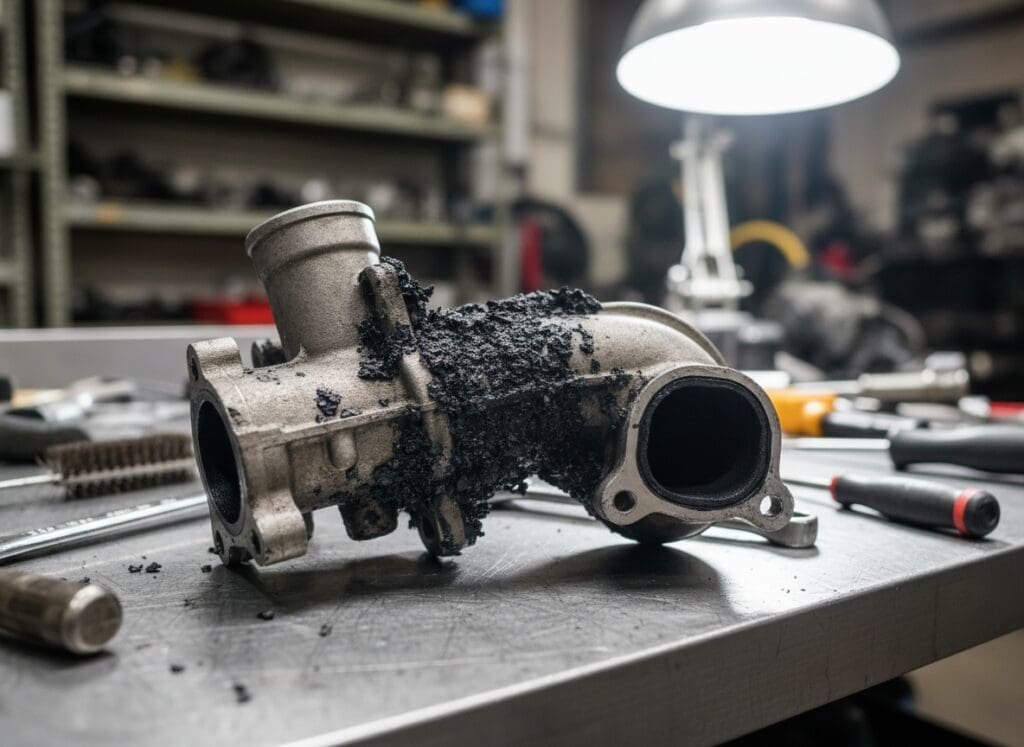
- Injector or pump issues: Blockages or failures in the AdBlue delivery system can trigger persistent warnings.
- NOx sensor faults: These can cause SCR system errors and warning lights, even if AdBlue is functioning correctly.
- Software glitches: Sometimes a software update or ECU reset is required to clear the warning.
AdBlue Warning Light by Vehicle: What to Check First
The reset process and most common fault varies by vehicle. Here’s what to check first on the UK’s most affected vans:
Mercedes Sprinter AdBlue Warning Light
Sprinters (2014–present) commonly develop NOx sensor faults and AdBlue pump failures rather than simple fluid issues. If the warning remains after refilling, suspect the AdBlue pump or level sensor — Sprinter pumps crystallise from infrequent use. A no-start countdown may activate within miles of the warning appearing.
Ford Transit AdBlue Warning Light
Ford Transits (2016–present) frequently show AdBlue warnings from SCR system sensor errors or EGR-related faults rather than fluid levels. The Transit’s system requires at least 5 litres before it will register a refill. See our full Ford Transit AdBlue problems guide for fault code details.
Peugeot Boxer AdBlue Warning Light
Boxer vans often trigger warnings from a failed AdBlue quality sensor or a blockage in the injector line. The warning can appear even with a full tank if the fluid has degraded. See our Peugeot Boxer AdBlue guide for model-specific steps.
For more on technical issues, read our AdBlue Problems Service page.
Resetting the AdBlue Warning on a Mercedes Car (C-Class, GLC, E-Class)
The AdBlue message on a Mercedes car clears itself. Once you top the tank up, the car reads the new level on its own and the message disappears after an ignition cycle and a few miles of driving — you do not need a dealer tool for a straightforward refill. If it is still showing after that, the problem is the level sensor or the SCR system, not the fluid.
- Check the level first: press the home button on the steering wheel, scroll to Service in the driver’s display, then select AdBlue. It shows the level and the remaining AdBlue range.
- Add around 5 litres, not a full tank: a five-litre top-up is enough to clear a low-level warning and avoids overfilling the filler neck. A diesel C-Class carries a little over 20 litres, roughly 10,000 to 15,000 miles’ worth, so the tank is normally filled properly at service.
- Know which warning you have: the amber message typically appears with around 1,500 miles of AdBlue range left. A red message means refill now — the no-start countdown follows.
- Then drive it: the message will not go the moment you finish pouring. Give it an ignition cycle and several miles before you decide it has failed to reset.
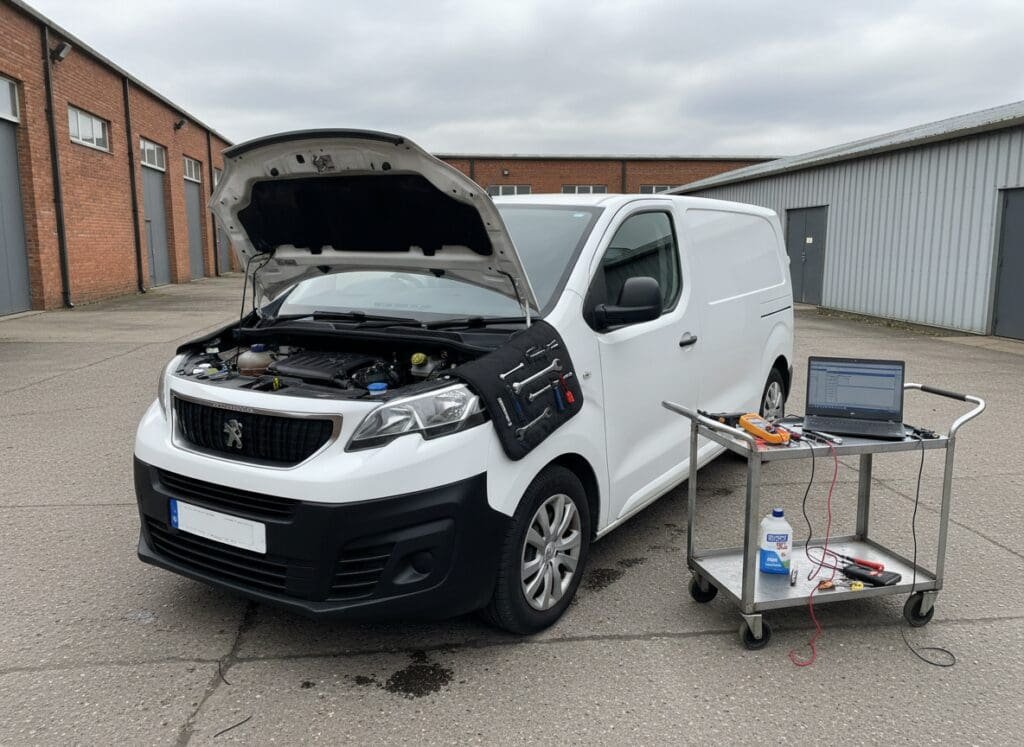
If the message survives a proper top-up and a drive, stop adding fluid. On the car range the usual causes are the same ones we see on the vans — a failed AdBlue level or quality sensor, a NOx sensor, or a pump that has crystallised through short-trip use — and each needs a fault-code read before anything is replaced. Sprinter owners should use our Mercedes Sprinter AdBlue reset guide instead, and we can bring a mobile AdBlue diagnostic to you either way.
When to Seek Professional Help
If your warning light won’t reset after topping up and basic checks, it’s best to book a professional diagnostic. A specialist can:
- Scan for fault codes with dealer-level tools
- Test sensors and AdBlue delivery components
- Reset the system safely and legally
- Advise on repairs or replacements if needed
Attempting DIY electrical resets or bypasses can cause further damage, void your warranty, or make your van illegal for road use.
AdBlue Warning Light and MOT
Since 2023, a persistent AdBlue or engine management warning light is an automatic MOT fail for Euro 6 vans and most modern diesels. Don’t risk a failed test—sort the issue before your next MOT. For more on MOT rules, see our MOT after emissions deletes guide.
Preventing Future AdBlue Warnings
- Always use high-quality, approved AdBlue fluid
- Keep the tank above one-third full—don’t wait for warnings
- Service the AdBlue system as part of your regular maintenance
- Address warning lights promptly to avoid limp mode or immobilisation
For more maintenance tips, check our AdBlue Pump Repairs & Costs article.
Can You Bypass or Delete the AdBlue Warning Light?
Some garages offer AdBlue delete or warning light bypass services, especially online. Be warned: this is illegal for road use in the UK, will fail your MOT, and can void your insurance. Always seek a compliant repair instead. For more on the risks, see Is AdBlue Delete Legal in the UK?.
Frequently Asked Questions
Will my van go into limp mode if the AdBlue light is on?
Yes — if the AdBlue level drops critically low or a system fault is detected, most Euro 6 vans will enter limp mode because of AdBlue (restricted speed and power). Some vehicles also trigger a no-start countdown, meaning the engine will not restart once turned off until the fault is resolved.
Why is my AdBlue warning light still on after topping up?
Topping up only fixes the warning if low fluid was the cause. If the warning remains, the likely cause is a faulty level sensor, a blocked or failed AdBlue pump, or an SCR/NOx system fault. These require a diagnostic scan with dealer-level tools, not just a refill.
How long can I drive with the AdBlue warning light on?
It depends on the fault. A simple low-fluid warning typically gives you 1,000–2,000 miles before the system locks out. A system fault can trigger a no-start countdown within miles. Do not ignore the warning — driving with a persistent fault risks immobilisation and an automatic MOT failure.
Can I reset the AdBlue warning light myself?
Only if the cause was low fluid. Refill to at least 5 litres, cycle the ignition 2–3 times, and drive for 10–15 minutes. If the light persists, you cannot safely reset it without a diagnostic scanner — software resets without fixing the underlying fault will cause the warning to return immediately.
Will the AdBlue warning light cause an MOT failure?
Yes. Since 2023, any active warning light relating to the emissions system — including AdBlue — is an automatic MOT failure for Euro 6 vehicles. Resolve the fault before your test.
Summary: Act Early, Stay Road Legal
AdBlue warning lights are a sign your emissions system needs attention. While some resets are simple, persistent warnings require diagnostics and professional repair. Don’t ignore the light—protect your van, your MOT, and your wallet by sorting the issue early. Contact our team for expert help or a mobile diagnostic visit anywhere in the UK.