iFixAdBlue — Leicester & the Midlands
NOx Sensor Reset & Adaptation: Why a New Sensor Alone Doesn’t Clear the Fault
You’ve replaced the NOx sensor. The parts cost was significant. The warning light is still on. Here’s why that happens almost every time, and what the correct reset procedure actually involves.
Replacing a NOx sensor does not automatically clear the fault light or reset the SCR system. The ECU holds learned calibration values from the old sensor in non-volatile memory, and simply disconnecting the battery will not erase them. A proper adaptation reset using a professional diagnostic tool — followed by a sustained drive cycle to relearn readiness monitors — is required before the fault clears and the system operates normally.
This is the single most common source of confusion we encounter with NOx sensor jobs. A driver replaces a sensor themselves or has it done at a local garage, the repair costs a meaningful amount of money, and the engine management light stays exactly where it was. The next step is usually a forum thread, a second sensor replacement, or a guess that the SCR catalyst needs replacing. In the majority of cases, none of those are correct — the missing step is the adaptation reset.
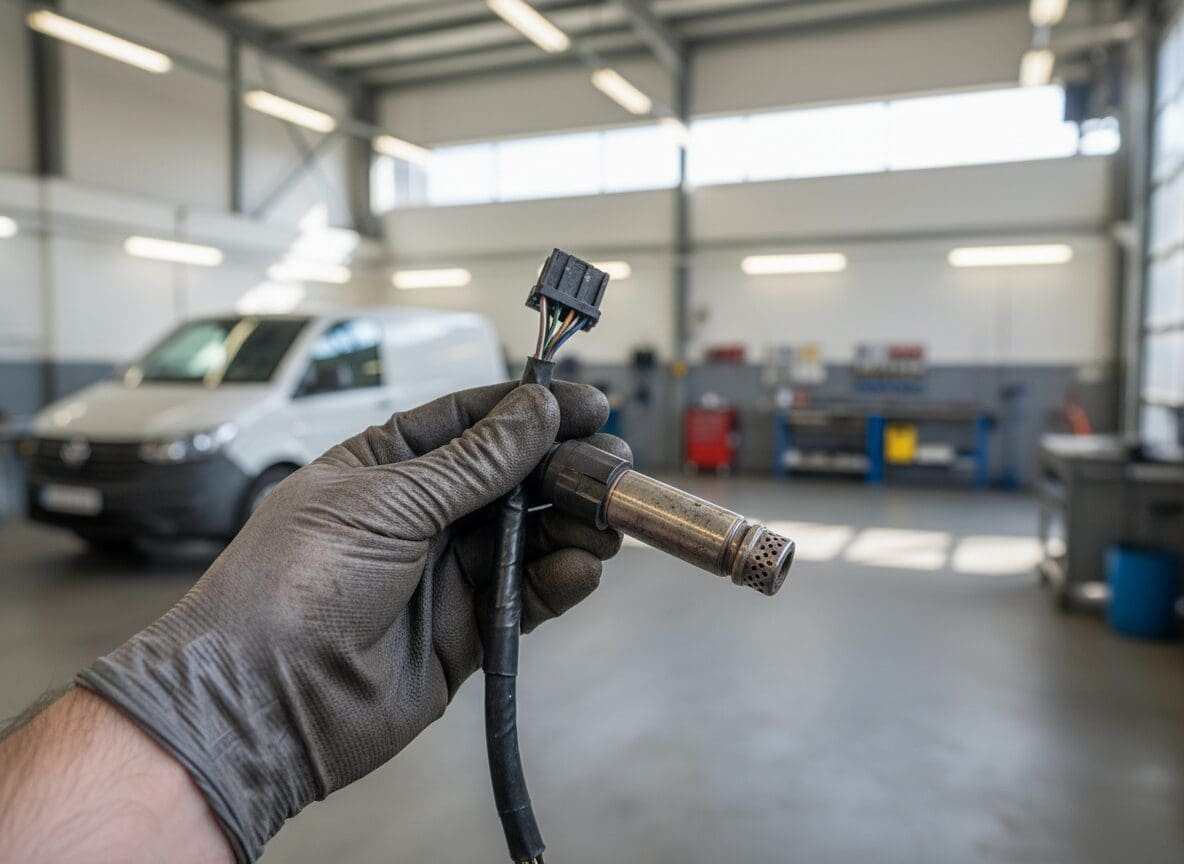
Before you spend money on parts, it’s worth understanding what a NOx sensor actually does and how the NOx sensor works in a diesel SCR system — because the reset procedure makes much more sense once you understand the role it plays.
What’s in this guide
- Why the light stays on after replacement
- Why disconnecting the battery doesn’t work
- What the adaptation reset actually does
- The correct reset procedure, step by step
- The drive cycle: what it needs and why
- Readiness monitors and how to confirm the repair is complete
- If the fault still hasn’t cleared
- Frequently asked questions
Why the light stays on after replacement
The NOx sensor doesn’t work in isolation. Over time, the ECU builds up a set of learned values — sometimes called adaptations or calibration offsets — that account for the specific performance characteristics of the sensor installed in your vehicle. These values correct for minor variations between sensors and compensate for gradual degradation as the sensor ages.
When you replace the sensor, those learned values still exist in the ECU’s non-volatile memory. They were built around the old sensor’s behaviour. Now the ECU is receiving readings from a brand-new sensor — with different factory calibration characteristics — and it’s still applying corrections designed for the old one. The result is a mismatch between expected and actual readings, which the ECU flags as a fault.
The ECU also retains any Diagnostic Trouble Codes (DTCs) associated with the old sensor. Unlike minor faults that clear themselves after a certain number of successful drive cycles, NOx sensor and SCR-related codes are treated as confirmed emissions faults. They sit in non-volatile memory and require an explicit command to erase — they don’t disappear by themselves. This is by design: emissions-related faults must be confirmed as fixed before the system considers itself clean.
Replacing a NOx sensor doesn’t tell the ECU you’ve fixed anything. The ECU needs a specific command — via a diagnostic tool — to clear the old learned values, erase the stored DTCs, and allow the new sensor to begin its baseline calibration from scratch. Without that command, the system behaves as if the old sensor is still installed. (Source: Engineer Fix, NOx sensor reset guide)
Why disconnecting the battery doesn’t work
Battery disconnection is often suggested on forums as a way to “reset the ECU” after any sensor replacement. It’s not an effective approach for NOx sensor faults, and understanding why matters.
Disconnecting the battery clears the ECU’s volatile memory — short-term learned values like idle speed corrections and minor fuel trim adjustments. It does not clear non-volatile memory, which is where Diagnostic Trouble Codes and long-term learned adaptations are stored. Non-volatile memory is designed specifically to survive a power loss. This is how the ECU can record an emissions fault and retain it even after the battery has been disconnected for an extended period.
If you disconnect the battery and reconnect it and the light goes out, one of two things has happened: either the fault was a temporary one that would have cleared in time anyway, or the light will return within the first drive cycle when the ECU runs its next diagnostic self-test and finds the mismatch again. For a genuine NOx sensor replacement, battery disconnection provides no benefit.
The single most frequently reported wasted DIY step after a NOx sensor replacement is disconnecting the battery for 30 minutes hoping the light clears. It won’t clear a confirmed emissions DTC, and the light will return within one drive cycle. Skip this step entirely and go straight to an adaptation reset with a scan tool.
What the adaptation reset actually does
The adaptation reset is a service function sent from a diagnostic tool directly to the ECU’s SCR or emissions management module. It’s not the same as clearing a fault code — code clearing alone won’t do the job either. The adaptation reset specifically erases the learned calibration values associated with the old sensor, instructs the ECU to accept the new sensor’s output as its baseline reference, and removes any flags that mark the SCR system as requiring attention.
Different diagnostic platforms describe this function with different labels, including “NOx Sensor Replacement,” “SCR Adaptation Reset,” “Teach-in,” “Basic Setting,” or “Clear Learned Values.” The name varies by vehicle manufacturer and diagnostic software. The underlying function is the same — wiping the old calibration data so the new sensor can establish its own baseline from a clean state.
The site already has detailed information about the NOx sensor’s role in the NOx sensor failure symptoms guide — this post is specifically about what happens after the sensor has been replaced and the light stays on, which is a distinct situation with a distinct fix.
The correct reset procedure, step by step
Here is the sequence a workshop should follow after fitting a new NOx sensor. If you’ve had a sensor fitted elsewhere and the light is still on, these are the steps that were likely skipped.
- Connect a battery charger before starting. A stable power supply is essential. The adaptation process involves writing to ECU memory, and a voltage drop during that process can corrupt the data or abort the routine mid-way. This is not optional.
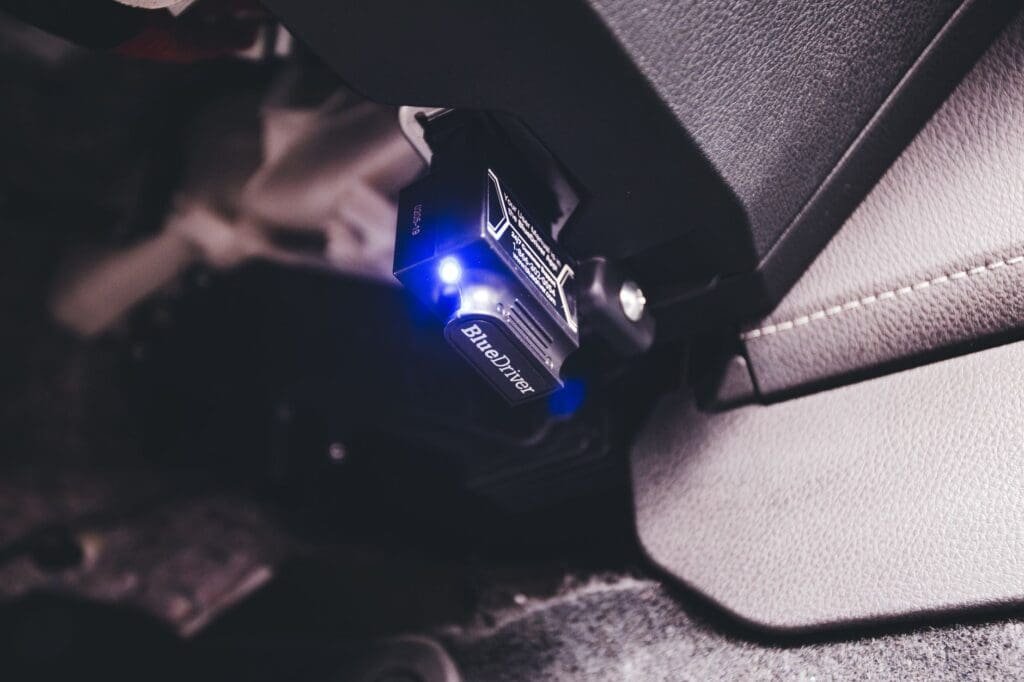
- Connect a professional-grade OBD-II diagnostic tool capable of accessing the SCR or emissions management module for your specific vehicle — not a generic code reader. Generic readers can clear fault codes but cannot run service functions.
- Navigate to the SCR/NOx service menu and locate the adaptation reset or sensor replacement function. Follow all on-screen prompts, which may include confirming the new part has been installed and meeting a minimum coolant temperature.
- Clear all stored DTCs once the adaptation has completed. On some platforms the adaptation function clears DTCs as part of the routine; on others, a separate clear step is required.
- Perform the drive cycle as described below to allow the ECU to verify the new sensor and complete the readiness monitors.
The drive cycle: what it needs and why
The adaptation reset tells the ECU to accept the new sensor. The drive cycle is what the ECU uses to verify that the sensor is actually working correctly — it can’t take that on faith based on the reset alone. The drive cycle runs the ECU’s self-diagnostic routine for the NOx aftertreatment system under real operating conditions.
For the NOx aftertreatment monitor to complete, the following conditions typically need to be met: the engine must reach full operating temperature from a cold start; there must be a period of sustained driving at a constant speed — typically around 50 mph for at least 30 minutes — which allows the SCR system to operate efficiently enough for the ECU to evaluate its performance; and the cycle should ideally end with a period of deceleration and idle before shutdown.
This isn’t a loop around the industrial estate. It’s a motorway or dual-carriageway run at a steady speed, long enough for the SCR catalyst and NOx sensors to reach stable operating conditions. Shorter or more varied driving can mean the readiness monitor doesn’t complete and the fault returns.
During the drive cycle, the ECU is checking that the NOx readings from the new sensor are within the expected range for the current engine load and AdBlue injection rate. If the readings look plausible and consistent, the monitor completes. If the numbers are unexpected, the ECU will flag a new fault — which is useful information because it usually points to the actual underlying problem (a failed SCR catalyst, contaminated AdBlue, or a wiring issue) rather than the sensor itself.
When we carry out NOx sensor diagnostics, we check the sensor heater circuit, live NOx ppm readings at idle and under load, the upstream versus downstream NOx differential (which tells you whether the SCR catalyst is doing its job), and AdBlue injection rate. This gives a clear picture of whether a sensor reset is sufficient or whether there’s a deeper issue. Read more about NOx sensor circuit fault codes P2202 and P2203 if your codes are pointing to a circuit problem rather than a performance issue.
Readiness monitors and how to confirm the repair is complete
The clearest confirmation that the reset and drive cycle have worked correctly is the status of the NOx aftertreatment readiness monitor. Readiness monitors are the ECU’s internal pass/fail tests for each emissions-related system. After a fault or reset, these monitors start in an “incomplete” or “not ready” state. They transition to “ready” or “complete” only when the ECU has run its diagnostic routine successfully under the required conditions.
Checking readiness monitor status requires a scan tool — most modern OBD-II tools can read these. Once the NOx/SCR readiness monitor shows “complete” and the live NOx sensor reading during a warm engine idle is tracking in a plausible range (typically 50–400 ppm in normal operation), the system has accepted the new sensor and the repair can be considered confirmed.
If you’re planning to take the vehicle for an MOT emissions test shortly after a NOx sensor replacement, wait for the readiness monitor to show complete first. A vehicle presenting for MOT with incomplete readiness monitors will fail on that basis alone, independent of actual emissions levels.
If the fault still hasn’t cleared
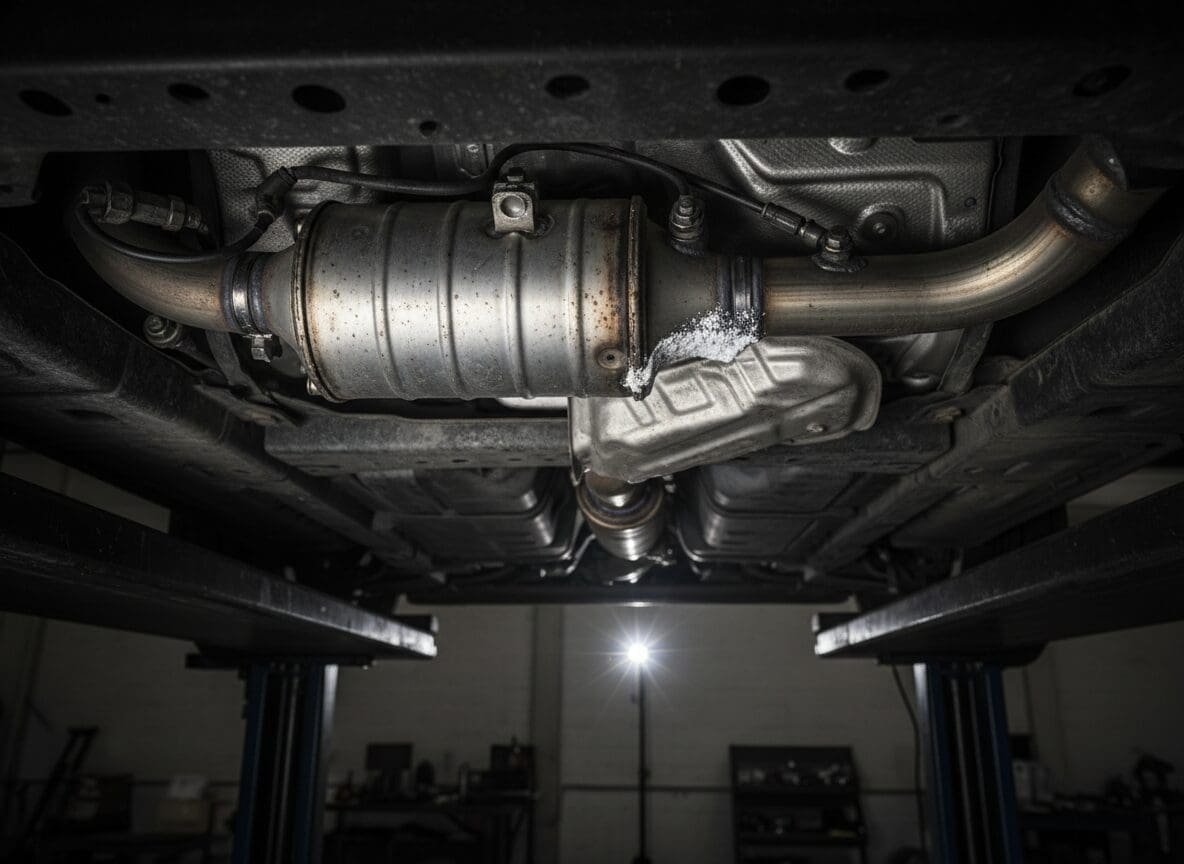
If you’ve completed a proper adaptation reset and drive cycle and the warning has returned, the fault is not the sensor. The most common culprits at this point are a deteriorating SCR catalyst (which the NOx sensor is correctly identifying as inefficient), contaminated or degraded AdBlue affecting SCR performance, or a wiring issue affecting the sensor signal rather than the sensor element itself.
It’s also worth confirming the sensor installed is the correct specification for the vehicle. Upstream and downstream NOx sensors are not interchangeable — they have different calibrations. Installing the wrong one produces persistent faults even with a perfect adaptation reset. We cover the cost and decision-making around NOx sensor replacement costs in the UK including when replacement is and isn’t the right call.
In all of these cases, the right next step is a proper live data diagnostic — measuring actual NOx ppm before and after the SCR catalyst at different load points — rather than replacing additional parts. The mobile AdBlue diagnostic service we run covers exactly this scenario: a full live-data evaluation of the NOx sensor, SCR catalyst efficiency, and AdBlue injection system to pinpoint where the problem actually sits.
Frequently asked questions
Does disconnecting the battery reset a NOx sensor after replacement?
No. Battery disconnection clears volatile memory (short-term fuel trims, idle corrections) but does not clear Diagnostic Trouble Codes stored in non-volatile memory, and it does not execute the specific adaptation routine required for the ECU to accept a new NOx sensor. If the light goes out briefly after a battery disconnect, it will return within one drive cycle when the ECU runs its next self-diagnostic. The only effective reset for a NOx sensor replacement is a dedicated adaptation function via a professional diagnostic tool.
How long does a NOx sensor drive cycle take?
For the NOx aftertreatment readiness monitor to complete, the vehicle typically needs a cold start, warm-up to operating temperature, and then at least 30 minutes of sustained driving at approximately 50 mph. The full cycle from cold start to completed monitor is usually 45–60 minutes under typical UK conditions. Short trips, stop-start driving, or low speeds don’t provide the sustained SCR operating conditions the ECU needs to verify the sensor performance.
What diagnostic tool do I need to reset a NOx sensor?
You need a professional-grade OBD-II tool capable of accessing service functions in the SCR or emissions management module — not a generic code reader. Basic code readers can clear fault codes but cannot execute adaptation resets, which is a dedicated service command distinct from clearing codes. Common professional tools capable of this include Autel scanners, Launch X431, HELLA Gutmann, and manufacturer-specific diagnostics (Star, IDAS, ODIS, etc.). The specific menu path varies by tool and vehicle — look for options labelled “NOx Sensor Replacement,” “SCR Adaptation,” or “Teach-in.”
Why is my NOx warning still on after replacing the sensor?
The most likely reason is that the adaptation reset was not performed after the physical replacement. The ECU still holds learned values from the old sensor and a stored DTC that must be explicitly cleared. Perform the adaptation reset with a diagnostic tool, then complete a drive cycle (at least 30 minutes at sustained motorway speed) and check that the NOx readiness monitor shows “complete.” If the fault returns after all of that, the underlying issue is likely an SCR catalyst efficiency problem or contaminated AdBlue rather than the sensor itself.
NOx light still on? We can diagnose it properly.
We carry out mobile NOx and AdBlue diagnostics with live data across Leicester, Loughborough, Hinckley, Coalville, Market Harborough, and the Midlands.
Mon–Sun 09:00–20:00 • Scan tool on board, not just a code reader
Written by
iFixAdBlue Technical Team — AdBlue, SCR, EGR and emissions specialists serving Leicestershire and the East Midlands. Published . Updated .