iFixAdBlue — Leicester & the Midlands
Land Rover & Range Rover AdBlue Fault: Warning Lights, Codes & Fixes
Land Rover or Range Rover showing an AdBlue warning? You’re not alone. These premium SUVs have some of the UK’s most sensitive SCR systems — and when they flag a fault, they mean it. Here’s exactly what’s happening and what to do about it.
Why Land Rovers Are Prone to AdBlue Faults
Land Rover and Range Rover diesel models built from 2016 onwards — including the Discovery 4 and 5, Range Rover Sport, Range Rover Velar, Defender diesel, and Evoque diesel — all use a Selective Catalytic Reduction (SCR) system. This system injects AdBlue (a urea solution) into the exhaust stream to reduce NOx emissions in line with Euro 6 regulations.
The problem is that Land Rover’s SCR system is unusually sensitive. The AdBlue injector, pump, and NOx sensors are exposed to significant heat cycles and vibration. Combined with the Land Rover’s tendency towards off-road use — which can jostle injector seals and expose the tank to temperature extremes — these vehicles generate a disproportionate share of AdBlue-related faults.
Many Land Rover owners don’t realise there’s even an AdBlue system until a warning light appears. By that point, the countdown has already started.
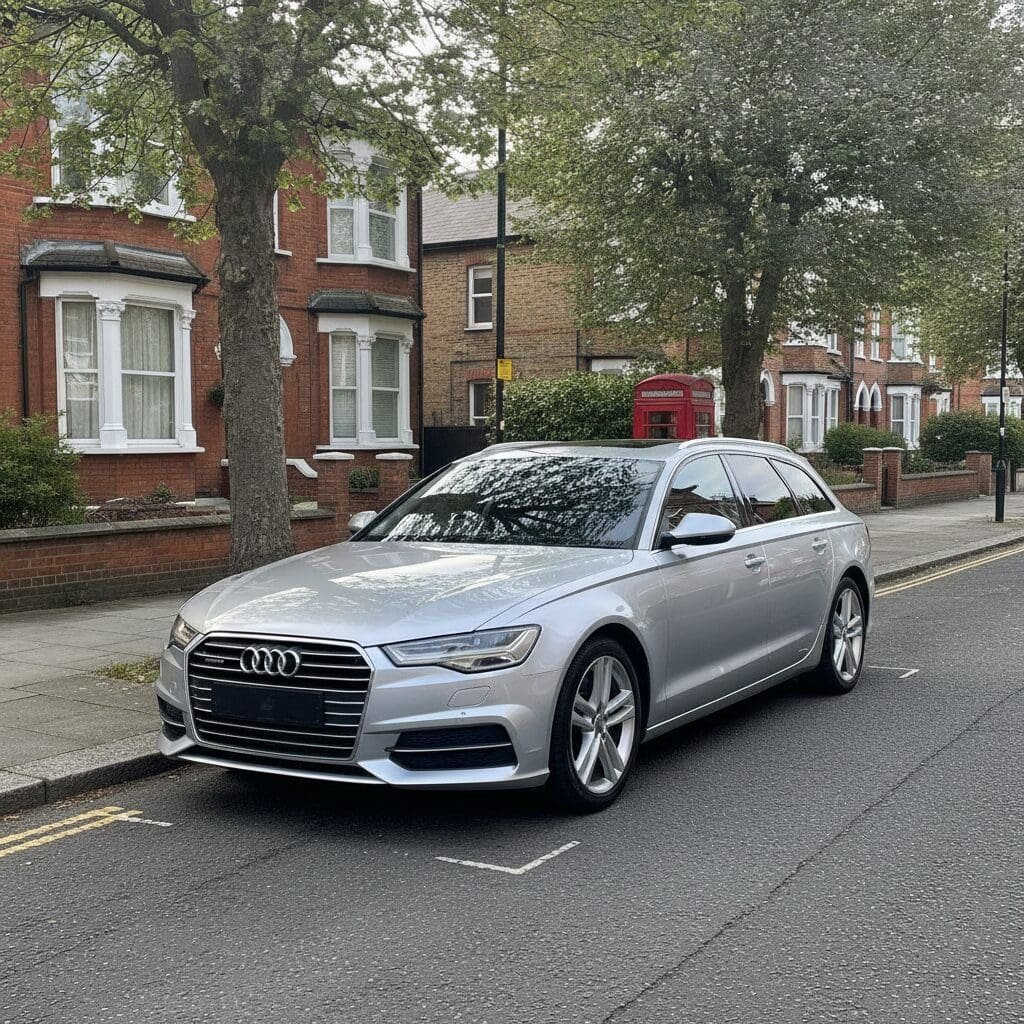
All Euro 6-compliant diesel Land Rovers do — Discovery Sport (2.0 SD4/TD4 from 2017), Discovery 5 (3.0 SDV6, 2.0 SD4), Range Rover Sport (3.0 SDV6, 2.0 SD4 from 2017), Range Rover Vogue/Autobiography (3.0 SDV6), Range Rover Velar (2.0 Ingenium diesel), and Defender (3.0 D200/D250/D300 from 2020). The older 4.4 TDV8 (pre-Euro 6) does not.
Warning Lights & Dashboard Messages Explained
Land Rover and Range Rover use a tiered warning system for AdBlue issues. Understanding what you’re seeing helps you respond appropriately.
Yellow AdBlue Warning (Low Fluid)
This appears when the AdBlue tank is running low — typically with 1,500–2,500 miles of fluid remaining. The vehicle will continue running normally. Top up with ISO 22241-compliant AdBlue from a reputable source. Using cheap or contaminated fluid can trigger sensor faults even with a full tank.
Amber Warning: “AdBlue System Fault” or “AdBlue Quality Poor”
This is the more serious message. It means the SCR system has flagged an active fault — not just low fluid. Common causes include a failing NOx sensor, injector blockage, pump failure, or the ECU detecting that the AdBlue concentration is outside acceptable limits. You’ll need a diagnostic scan to identify which component is at fault.
Red Warning + Countdown
If the fault persists or is severe enough, Land Rover will initiate a no-start countdown — typically displayed as “Engine will not start in X starts” or “AdBlue: X miles remaining to no-start.” This is the system’s way of forcing you to address the issue before the engine is locked out entirely.
“Engine Will Not Restart” Locked State
If the countdown reaches zero, the engine will still run (it won’t cut out while driving) but will refuse to restart once switched off. At this point, you need a specialist to either fix the underlying fault or perform a reset — a standard OBD reader won’t clear it.
If your Land Rover is showing “AdBlue System Fault” rather than simply “AdBlue Low,” adding more fluid will not fix the problem. The fault is in the system itself — the pump, injector, NOx sensor, or ECU calibration. Adding fluid to a faulty system can sometimes make diagnosis harder.
Common AdBlue Fault Codes on Land Rover & Range Rover
| Fault Code | Description | Likely Cause |
|---|---|---|
| P20EE | SCR NOx Catalyst Efficiency Below Threshold | Failing upstream NOx sensor, injector blockage, poor AdBlue quality |
| P204F | Reductant System Performance | Pump pressure low, injector fault, tank level sensor |
| P2202 | NOx Sensor Circuit Low (Bank 1) | Upstream NOx sensor failing or wiring fault |
| P2203 | NOx Sensor Circuit High (Bank 1) | NOx sensor short circuit or ECU fault |
| P2BAC | Reductant Quality Performance | Contaminated AdBlue or incorrect concentration |
| P203A | Reductant Level Sensor | Tank level sensor faulty or wiring damage |
| P228C | Fuel Pressure Regulator Control Performance | Sometimes appears alongside SCR faults on Ingenium engines |
Land Rover’s Terrain Response system and air suspension can also throw codes alongside AdBlue faults if the vehicle detects multiple system warnings — so a full system scan is important rather than reading codes in isolation.
The Most Common Causes of AdBlue Faults on Land Rovers
1. AdBlue Injector Blockage
The injector tip sits in the exhaust stream and is exposed to very high temperatures. Over time, the injector can crystallise with dried AdBlue residue — especially if the vehicle is used for short journeys that don’t allow the exhaust to reach full operating temperature. When the injector tip blocks, the SCR system can’t deliver reductant, and the NOx catalyst efficiency drops below threshold (triggering P20EE).
2. NOx Sensor Failure
Land Rovers use two NOx sensors — upstream (before the SCR catalyst) and downstream (after it). The upstream sensor is particularly vulnerable because it’s closer to the turbo outlet and experiences more thermal stress. A failing upstream sensor may report incorrect NOx readings even when the SCR system is working correctly, triggering false faults.
3. AdBlue Pump Failure
The AdBlue dosing pump draws fluid from the tank and delivers it at precise pressure to the injector. Pump failure is relatively common on Discovery 5 and Range Rover Sport models after 60,000–80,000 miles. Symptoms include a low-pressure fault code (P204F) and the system unable to dose correctly even when the tank is full.
4. Contaminated AdBlue
Using non-ISO 22241 AdBlue — cheap drum fluid, incorrectly stored product, or fluid past its shelf life — can contaminate the system. The ECU monitors AdBlue quality and will flag P2BAC if concentration falls outside 31.8–33.2% urea. In severe cases, contaminated fluid can crystallise in the injector and pump, requiring full replacement.
5. Wiring & Connector Corrosion
The AdBlue system on Land Rovers involves multiple sensors, the pump module, and the SCR catalyst — all connected by wiring that runs through the underside of the vehicle. On higher-mileage models and those used off-road, water ingress and corrosion in connectors can cause intermittent sensor faults without the component itself failing.
What Happens If You Ignore the AdBlue Fault
Land Rover’s software will not allow you to drive indefinitely with an unresolved AdBlue fault. The system counts down remaining engine starts and eventually locks the vehicle in a state where it will run but cannot restart once switched off.
This countdown can happen quickly — some owners report being given as few as 50 starts from the first warning. Given that a typical commuter might do 10 or more starts per day, this can mean less than a week before the vehicle is immobilised.
Unlike some other brands, Land Rover does not offer a dealer-only reset without also repairing the underlying fault. The ECU requires confirmation that the SCR system is functioning correctly before it will clear the lockout. This is why specialist intervention — rather than a trip to the dealer simply to reset a counter — is often the most cost-effective route.
If your Land Rover is already in the “engine will not restart” state, iFixAdBlue can attend your location with a full dealer-level diagnostic system. We can assess the fault, perform component-level repair or carry out a permanent delete, and get your vehicle moving again the same day in most cases.
Repair vs Delete: What Makes Sense for Land Rover Owners?
When Repair Is the Right Call
If your Land Rover is under warranty or relatively new (under 50,000 miles), repair of a single faulty component — typically the NOx sensor or injector — is often straightforward and cost-effective. A single NOx sensor replacement on a Range Rover Sport typically costs £300–£600 depending on the sensor location and the vehicle’s access difficulty. An AdBlue injector replacement is usually £400–£800 including parts and labour.
Repair makes the most sense when the rest of the SCR system is in good condition and there’s only one failing component involved.
When a Delete Makes More Sense
For higher-mileage Land Rovers — particularly Discovery 5 and Range Rover Sport models with 80,000+ miles — the SCR system can start to deteriorate as a whole. If you’ve already replaced a NOx sensor and the pump is also starting to fail, the total repair cost can quickly exceed £1,500–£2,500 on a vehicle that may not justify that expenditure.
In these cases, a combined AdBlue and NOx delete — a software-based solution that permanently removes the requirement for AdBlue from the ECU — is often the more practical long-term choice. The vehicle runs without the SCR system and the no-start countdown is permanently removed.
Removing the AdBlue/SCR system from a vehicle’s software means it will no longer meet Euro 6 emissions standards. This affects suitability for use in Clean Air Zones and ULEZ areas, and the vehicle cannot be returned to a fully compliant state without reversing the software change. This is something to weigh carefully based on where you drive.
Mobile iFixAdBlue Service for Land Rover & Range Rover Owners
We operate a mobile diagnostic and repair service across Leicester and the wider Midlands, covering Leicestershire, Warwickshire, Northamptonshire, Derbyshire, and Nottinghamshire. We come to your driveway, workplace, or wherever the vehicle is situated — there’s no need to tow it to a garage.
For Land Rover owners, our visit typically includes a full dealer-level system scan across all modules, not just the AdBlue fault. This often uncovers secondary faults (air suspension, terrain response) that are related to the same root cause, ensuring you get a complete picture rather than chasing individual warning lights separately.
We carry replacement NOx sensors, AdBlue injectors, and pump modules in stock for the most common Land Rover applications. Where a delete is the right outcome, we can complete this in a single visit using our professional ECU programming equipment.
Got an AdBlue Fault on Your Land Rover?
Don’t let it reach no-start. Call iFixAdBlue for same-day mobile diagnosis and repair across Leicester and the Midlands.
Frequently Asked Questions
How much does it cost to fix a Land Rover AdBlue fault?
It depends on the cause. A NOx sensor replacement is typically £300–£600. An AdBlue injector is £400–£800. If the pump has failed, expect £500–£900. If multiple components are failing on a higher-mileage vehicle, a software delete (£400–£600) is often more economical than replacing each part individually.
Can I drive my Range Rover with the AdBlue warning on?
If it’s just a “low level” warning, yes — but top it up soon. If it’s an “AdBlue System Fault” message, you can still drive, but the countdown has started. Once the counter reaches zero, the vehicle will still run but won’t restart. Get it diagnosed as soon as possible.
Will Land Rover main dealer reset the AdBlue fault?
A main dealer can reset the counter, but Land Rover’s software requires the underlying fault to be resolved (or the component replaced) before a permanent reset is accepted. Dealers will typically quote for part replacement, which is why many owners seek a specialist alternative.
Does the AdBlue delete affect my insurance?
Any modification to your vehicle’s engine management system should be disclosed to your insurer. In practice, most insurers do not ask specifically about emissions software; however, if you plan to use your vehicle in a Clean Air Zone or ULEZ area, you should be aware that a deleted vehicle will fail the emissions check.
Which Land Rover models are most commonly affected?
Discovery 5 (2017–present) and Range Rover Sport (2017–present) with the 3.0 SDV6 and 2.0 SD4 engines see the highest volume of AdBlue faults in our experience. The Discovery Sport 2.0 TD4 also features regularly. Older models with the 3.0 TDV6 (pre-Euro 6) do not have AdBlue systems and are not affected.