U-code diagnostics • NOx comms loss • SCR warnings
U029D Fault Code: NOx Sensor Communication Lost (Meaning, Causes, Fix Steps)
U029D is not “a bad reading”.
It’s a lost conversation between modules.
Fixing the comms issue often stops the repeat AdBlue warnings.
Mobile across Leicester, Loughborough & surrounding Midlands • Mon–Sun 09:00–20:00
The U029D fault code usually means the ECU has lost communication with a NOx-related module or sensor on the network.
In plain terms, it cannot “see” the component it needs to monitor emissions performance.
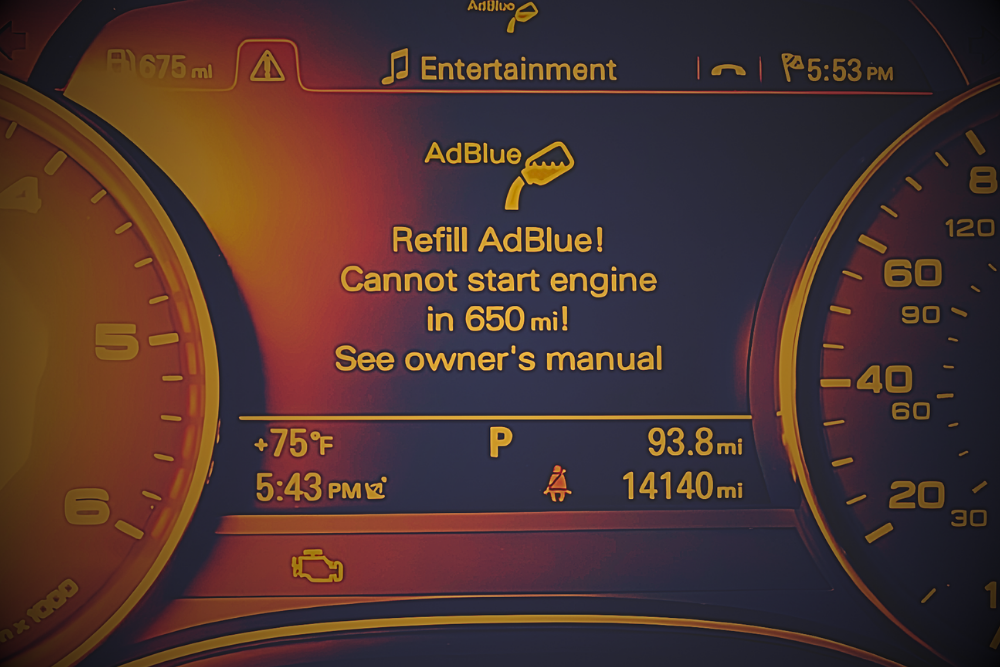
This is why U029D often shows up alongside AdBlue warnings.
If the system cannot trust sensor communication, it cannot verify SCR performance, and the fault chain begins.
Table of contents
Quick check before you do anything else
- Write down every code present, not just U029D.
- Note when it happens: cold start, wet weather, motorway run, after clearing.
- If a countdown is active, don’t keep clearing it and hoping it sticks.
What U029D means
U-codes are communication codes.
They do not say “this part is bad”.
They say “the ECU can’t communicate with a module it expects to see”.
| Code | Type | Plain English meaning | What it often points to |
|---|---|---|---|
| U029D | Network / comms | Lost communication with NOx sensor/module | Power/earth issue, connector fault, wiring damage, CAN communication interruption |
Why this matters for AdBlue
NOx readings help the system confirm whether dosing is working.
If the ECU loses communication, it loses confidence in SCR performance.
Warnings and limp strategies can follow even if the rest of the hardware looks fine.
Symptoms you’ll notice
U029D can be intermittent, which is why it frustrates people.
A loose plug, water in a connector, or a damaged wire can “work” until vibration or moisture changes it.
- Engine light and emissions warning message
- AdBlue/SCR warning that clears then returns
- Fault appears more in wet weather or after washing
- Fault appears on long runs when heat and vibration peak
- Countdown appears later if other SCR codes join in
Intermittent is still a fault
If your van throws U029D once a week, the ECU still counts it as a failure.
Over time, that can build into repeat warnings and restrictions.
Why it happens (real causes)
Most U029D cases come down to one of four things.
The trick is checking them in the right order so you don’t throw parts at it.
1) Connector and pin problems
- Water ingress and corrosion
- Loose pin fit or pushed-back pins
- Plug not fully seated or broken locking tab
If it appears after rain, start here.
2) Wiring damage in the harness
- Rubbing on brackets and heat shields
- Crushed sections near underbody protection
- Previous repairs that have failed again
3) Power supply and earth integrity
- Weak supply can make modules drop off the network
- Poor earth can create comms noise and signal dropouts
- Voltage drop under load reveals faults static checks miss
4) The sensor/module itself
Sometimes the module fails internally and stops communicating.
The key is proving that the power, earth and wiring are stable first.
Fix steps in the right order
Here’s the practical sequence that gets results.
It’s the difference between solving U029D and chasing it for weeks.
Step 1: Capture the full code picture
- Scan all modules and save the full list.
- Record freeze frame data if your tool supports it.
- Note whether the fault is current, pending, or historic.
Step 2: Do a close connector inspection
- Check for moisture, corrosion, dirt and broken locks.
- Look for any sign the plug has been disturbed or is rubbing.
- Check pins for push-back or slack fit.
Step 3: Inspect harness routes
- Follow the loom to where it joins the main harness.
- Check near moving parts and heat sources.
- Look for rubbing damage that opens when the engine moves.
Step 4: Confirm power and earth under load
- Check supply voltage stability with engine running.
- Check earth points for corrosion and tightness.
- If the fault happens on long runs, think heat-related resistance changes.
Step 5: Only then consider module replacement
If you’ve proved wiring and supply are stable but comms still drop, the sensor/module can be the cause.
Replacing it without checking the basics often leads to repeat faults.
If you also have circuit input codes, this related post helps:
P2202/P2203 NOx circuit fault guide.
Codes that commonly appear alongside U029D
U029D rarely travels alone if the issue has been present a while.
Here are the most common pairings and what they suggest.
U029D + P20EE
If the ECU can’t read NOx properly, it may log efficiency faults because it can’t verify reduction.
Context hub: AdBlue fault codes master list
U029D + no-start countdown
Repeated failure cycles can escalate to a countdown even when the van feels fine between faults.
U029D + “SCR fault after refill”
Sometimes the timing makes it look like the refill caused it.
In reality, the system self-check runs and finds the comms issue.
When to book diagnosis
Book diagnosis if:
- The code returns quickly after clearing.
- It happens after wet weather or washing.
- You have U029D plus P20EE, P204F, or P20E8.
- A countdown has started and you need a proper fix route.
Need it checked mobile?
iFixAdBlue covers Leicester, Loughborough and nearby counties.
We identify whether it’s wiring, power/earth, or module failure, then get you back to reliable starts.
If you’re weighing up options after repeated SCR problems, read: AdBlue delete vs repair.
U029D showing today?
Stop the repeat warnings by fixing the comms problem at source.
Mobile across Leicestershire and nearby counties • Mon–Sun 09:00–20:00