iFixAdBlue — Leicester & the Midlands
Swirl Flap Delete UK: What It Is, What It Costs & When You Need One
Swirl flaps cause catastrophic engine damage when they fail — and on many diesels, failure is a question of when, not if. Here’s everything van and car owners need to know: what swirl flap removal involves, what it costs, and why many mechanics recommend it before disaster strikes.
What Are Swirl Flaps and What Do They Do?
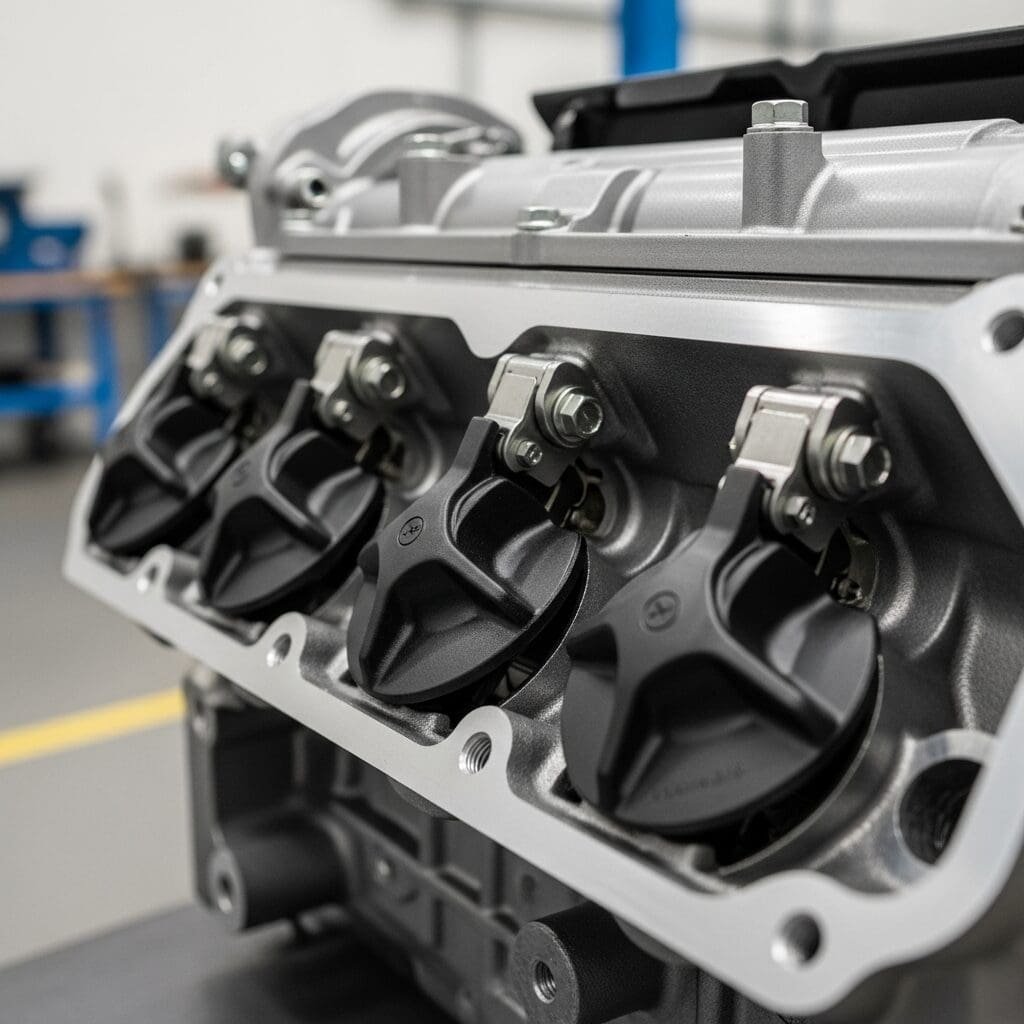
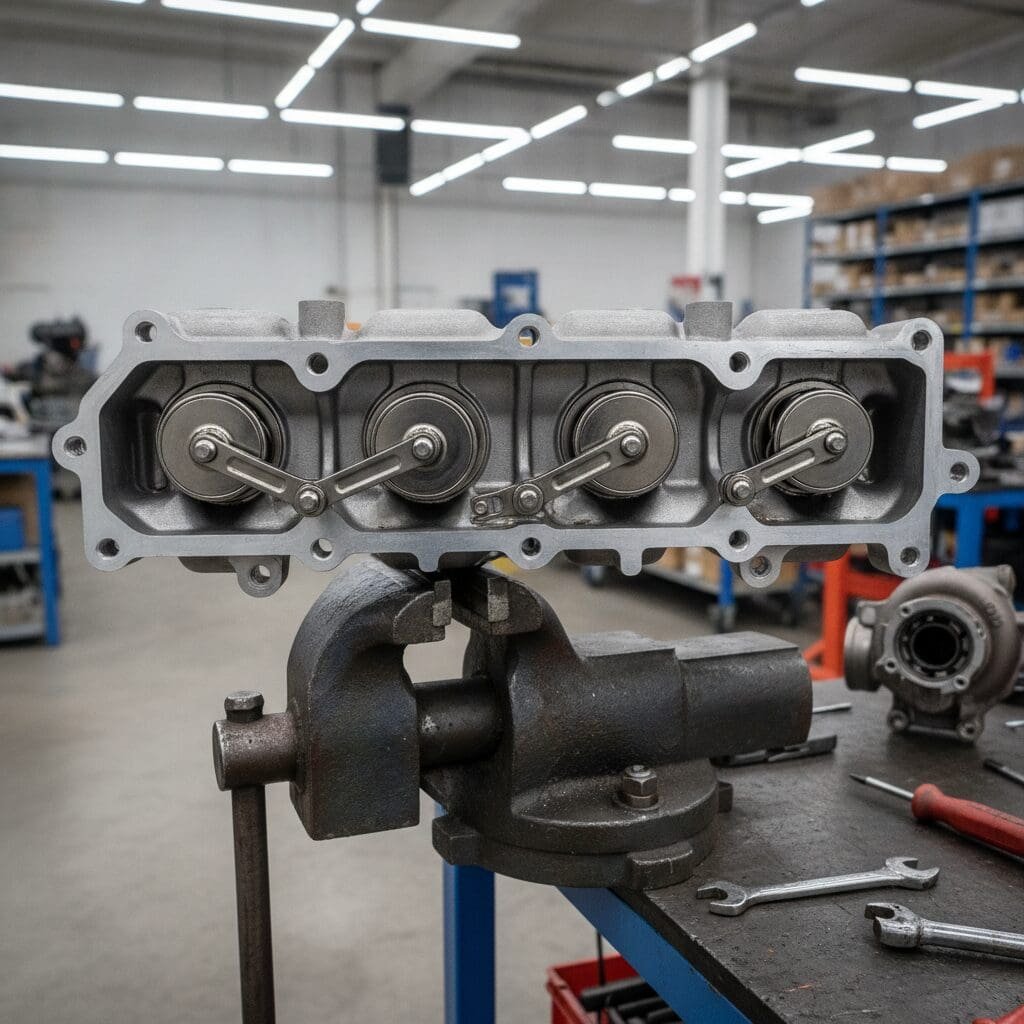
Swirl flaps — also called tumble flaps or swirl control valves — are small butterfly-style valves inside the inlet manifold of many modern diesel engines. At low engine speeds and light loads, the ECU partially closes the swirl flaps to create turbulence in the intake air. This turbulence improves air-fuel mixing in the combustion chamber, helping the engine burn fuel more cleanly at idle and low revs.
Swirl flaps were primarily introduced to help diesel engines meet Euro 4 and Euro 5 standards without relying entirely on the EGR or DPF systems. In theory, a sensible engineering compromise. In practice — particularly on BMW, Land Rover, and certain VAG engines — swirl flaps are a well-documented reliability risk that can cause catastrophic engine failure when they break free.
These are three separate emissions control systems. A swirl flap delete addresses only the swirl flap assembly in the inlet manifold. It doesn’t affect your AdBlue system, DPF, or EGR valve. However, many owners choose to delete swirl flaps alongside an EGR delete, since both systems sit on the inlet side and both carry reliability risks — combining the work saves on call-out cost.
Why Swirl Flaps Fail — And Why It Matters So Much
Swirl flaps fail for several reasons, but the most dangerous is mechanical breakage. Because swirl flaps sit inside the inlet manifold — directly above the combustion chambers — when a flap breaks, fragments can be ingested into the engine. A piece of metal entering a diesel combustion chamber at operating revs causes what engineers call FOD damage (foreign object damage): bent connecting rods, destroyed pistons, cracked cylinder heads.
Repair costs for swirl flap ingestion damage typically run from £2,000 to £8,000+, depending on the engine. In many cases the engine requires complete replacement. This isn’t theoretical — BMW issued a technical service action on the N47 engine in some markets precisely because swirl flap failure was causing widespread engine damage.
Symptoms of Swirl Flap Problems
Swirl flap faults don’t always announce themselves dramatically before failure. Watch out for:
- Rough idle or lumpy running — a sticking or partially open swirl flap changes airflow, causing uneven combustion
- Hesitation on acceleration from low revs — particularly from low RPM where swirl flaps have the most influence
- Intake manifold rattling — a loose flap assembly can rattle at specific RPM before breaking free
- Fault codes P2015, P2016, P2017, P2020 — swirl flap position sensor circuit codes often appear before physical failure
- Excessive carbon build-up — faulty flap positioning accelerates carbon accumulation in the inlet manifold
A rattle from the inlet area — especially at cold start or during deceleration — can indicate a loose swirl flap. Continuing to drive risks detachment and catastrophic engine damage. Have the vehicle diagnosed immediately before starting it again.
Which Vehicles Have Swirl Flap Problems?
BMW Diesels (Most Common in the UK)
The BMW N47 (320d, 520d, 118d, X1 etc.) and M57 (530d, 730d, X5 3.0d) engines are the most commonly seen for swirl flap failure in the UK. The N47 in particular has a long history of swirl flap and timing chain issues. Swirl flap delete is strongly recommended on any N47 or M57 with over 60,000 miles, even if no fault codes are present — it’s a preventative measure that costs a fraction of an engine rebuild.
Land Rover / Range Rover (2.7 TDV6)
The 2.7 TDV6 diesel, fitted to Discovery 3, Discovery 4, Range Rover Sport (pre-2013), and Freelander 2, has well-documented swirl flap failures. The manifold design on these engines means broken fragments have a particularly short path to the cylinder head. On any 2.7 TDV6 with over 80,000 miles, physical removal of the swirl flap assembly is the safest course of action.
Audi & VW TDI (2.0 and 3.0 TDI)
The 2.0 TDI engine used across VW, Audi, SEAT and Skoda platforms uses swirl flaps in many configurations. While less catastrophically failure-prone than the BMW N47, swirl flap P2015/P2016 codes are common on higher-mileage 2.0 TDI vehicles. The 3.0 TDI (Audi, VW Touareg, Porsche Cayenne) also uses swirl flaps and benefits from deletion on high-mileage examples.
Mercedes CDI
Some Mercedes CDI engines — particularly the OM646 and OM647 in older C-Class, E-Class, and Vito vans — use swirl flaps, though Mercedes failures are less common than BMW or Land Rover in UK specialist experience.
Software Delete vs Physical Removal
Software Delete (ECU Remap)
A software swirl flap delete involves reprogramming the ECU to hold the swirl flap actuator permanently open, eliminating the operating cycle that causes wear and crystallisation. The physical flaps remain in the manifold but are locked fully open via software. This approach is suitable for engines where the flaps are still physically intact, and can typically be completed in under two hours without removing the inlet manifold.
Physical Removal (Blanking)
Physical removal means opening the inlet manifold and either removing the swirl flap spindle assembly entirely or installing blanking inserts. This is more invasive but guarantees no physical component can break free into the engine. Physical removal is recommended when the vehicle already has swirl flap fault codes, visible carbon damage around the assembly, or when the vehicle has very high mileage and the flaps are approaching the end of their service life.
How Much Does a Swirl Flap Delete Cost in the UK?
| Solution | Typical UK Cost | Best For |
|---|---|---|
| Software delete only | £200–£350 | Flaps intact, no fault codes — preventative measure |
| Physical removal | £400–£700 | Fault codes present or visible wear |
| Physical removal + manifold clean | £550–£900 | Heavy carbon build-up or lumpy idle on high-mileage BMW/Land Rover |
| Combined software + physical | £600–£1,000 | Most thorough — software locks flaps permanently after physical removal |
iFixAdBlue offers mobile swirl flap delete across Leicester and the Midlands. We assess which approach is appropriate for your specific vehicle and provide a fixed quote before starting any work.
Benefits of Swirl Flap Deletion
- Eliminated failure risk — the primary reason owners on high-risk engines choose deletion
- Smoother idle — removing variable airflow at low speeds often improves idle quality on worn engines
- Reduced carbon accumulation — with flaps permanently open, the turbulence that accelerates carbon deposit build-up is removed
- Permanent fault code resolution — P2015/P2016/P2017 codes are cleared and cannot return
- Cost savings when combined with EGR delete — deleting both systems in one visit reduces total labour cost on affected engines
The BMW N47, M57, and Land Rover 2.7 TDV6 all have both problematic swirl flaps and EGR systems. Many of our Leicester and Midlands customers choose to address both in a single visit, eliminating the two most common causes of inlet-side problems. Combined packages are available — contact us to discuss your vehicle.
Swirl Flap Problems? We Come to You.
Mobile swirl flap delete and EGR delete across Leicester and the Midlands. Fixed quote before we start.
Frequently Asked Questions
Is a swirl flap delete legal in the UK?
Swirl flap deletion is not illegal in the UK. Unlike EGR or DPF deletion — which affects particulate and NOx emissions directly — swirl flaps primarily affect intake airflow and are not part of the vehicle’s type-approval emissions equipment. A swirl flap delete does not typically cause an MOT failure, though any ECU software modification should be disclosed to your insurer.
Will deleting swirl flaps affect performance or fuel economy?
The real-world effect on performance is minimal. Swirl flaps operate only at low RPM and light load — conditions where most drivers won’t notice a change. At the RPM ranges used during normal driving, the flaps are already fully or nearly open anyway. Some drivers report slightly improved throttle response at low revs after deletion, though this is subtle.
How long does a swirl flap delete take?
A software-only delete takes 60–90 minutes. Physical removal with manifold work takes 2–4 hours depending on the engine. BMW N47 manifold access is reasonably straightforward; Land Rover 2.7 TDV6 requires more disassembly time. Both can be completed at your location as a mobile visit.
Can I have a swirl flap delete at the same time as an AdBlue delete?
Yes. On Land Rovers with both swirl flaps and AdBlue systems (Discovery 5, Range Rover Sport 2017+), both can be addressed in the same visit. The swirl flap delete targets the inlet side; the AdBlue delete is a separate ECU software change to the emissions management system. Combining them saves on the call-out fee.