Isuzu D-Max AdBlue Guide
Isuzu D-Max AdBlue Faults: P207F, Low Concentration & What Actually Fixes It
The P207F fault on the Isuzu D-Max almost never means your AdBlue fluid is bad. Here is what the code actually indicates, why most DIY fixes miss the real cause, and what works.
In This Guide
The Isuzu D-Max is one of the most popular pickups in UK agriculture, construction and the trades — and since the 2020 model year it has been fitted with a full SCR AdBlue system to meet Euro 6d emissions standards. Unlike the van-specific AdBlue guides that dominate search results, the D-Max has its own fault profile. The failure patterns are different, the duty cycle is different, and the fixes are not always the same.
P207F is the code most D-Max owners encounter first. This guide explains what the code actually points to, why most online advice misses the real cause, and what the correct diagnostic and repair path looks like.
What P207F Actually Means on the D-Max
P207F is a standardised OBD-II code: Reductant Quality Performance. It means the SCR system quality sensor — fitted in the AdBlue tank — has detected that the urea concentration in the fluid is below the 32.5% threshold required by ISO 22241, the international standard for AdBlue (diesel exhaust fluid) quality.
The ECU uses that 32.5% concentration as its baseline for calculating how much fluid the dosing injector needs to inject into the exhaust stream to reduce NOx. If the sensor reports a lower concentration, the ECU flags P207F and starts restricting performance — because it cannot accurately calculate the dosing volume needed to stay within emissions limits.
The common assumption is that this means the fluid in the tank is wrong or contaminated. That is often not the case. For a full breakdown of what P207F means across different vehicles, see our P207F guide covering causes, diagnosis and contamination myths.
Why the D-Max Gets P207F Differently to Vans
Panel vans — Sprinters, Transits, Boxers — typically see P207F most often from contaminated fluid or cheap aftermarket AdBlue. The D-Max failure pattern is different for two reasons:
- Duty cycle: The D-Max is commonly used for towing, off-road driving, and low-speed high-load work. This creates high SCR temperatures and repeated short dosing events that put more stress on the injector than typical motorway van work.
- External fluid storage: Many agricultural D-Max operators use bulk outdoor AdBlue storage tanks exposed to UV, temperature cycling, and potential contamination. The fluid quality issue is real in this context — but even then, injector wear is often the primary trigger.
The Real Causes: Injector vs Fluid Quality
Blocked or worn dosing injector
The dosing injector injects precise quantities of AdBlue into the exhaust pipe upstream of the SCR catalyst. Over time — particularly under the duty cycles typical of trade pickups — the injector tip accumulates crystallised urea deposits. When it cannot inject the full calculated dose, the actual concentration of AdBlue hitting the catalyst falls below what the system expects, and P207F triggers even though the tank contains good-quality fluid. See also our AdBlue fault code master list for related codes that often appear alongside P207F.
Contaminated or degraded AdBlue
Genuine fluid quality issues do trigger P207F. Causes include outdoor bulk tanks with UV-degraded urea, tanks that have had diesel splashed in them from a shared nozzle, or AdBlue that has sat in very hot conditions and the urea has partially hydrolysed. If you are running bulk outdoor storage, test the fluid with an AdBlue refractometer before replacing mechanical components — a small investment that can save a significant repair bill.
Quality sensor fault
The quality sensor in the tank (which measures fluid conductivity to infer urea concentration) can fail independently of the fluid. A faulty sensor reads low concentration even with perfect fluid. This is less common on the D-Max than injector problems, but it does occur — particularly after a tank has run dry and been left empty in freezing conditions.
What a Proper Diagnostic Scan Reveals
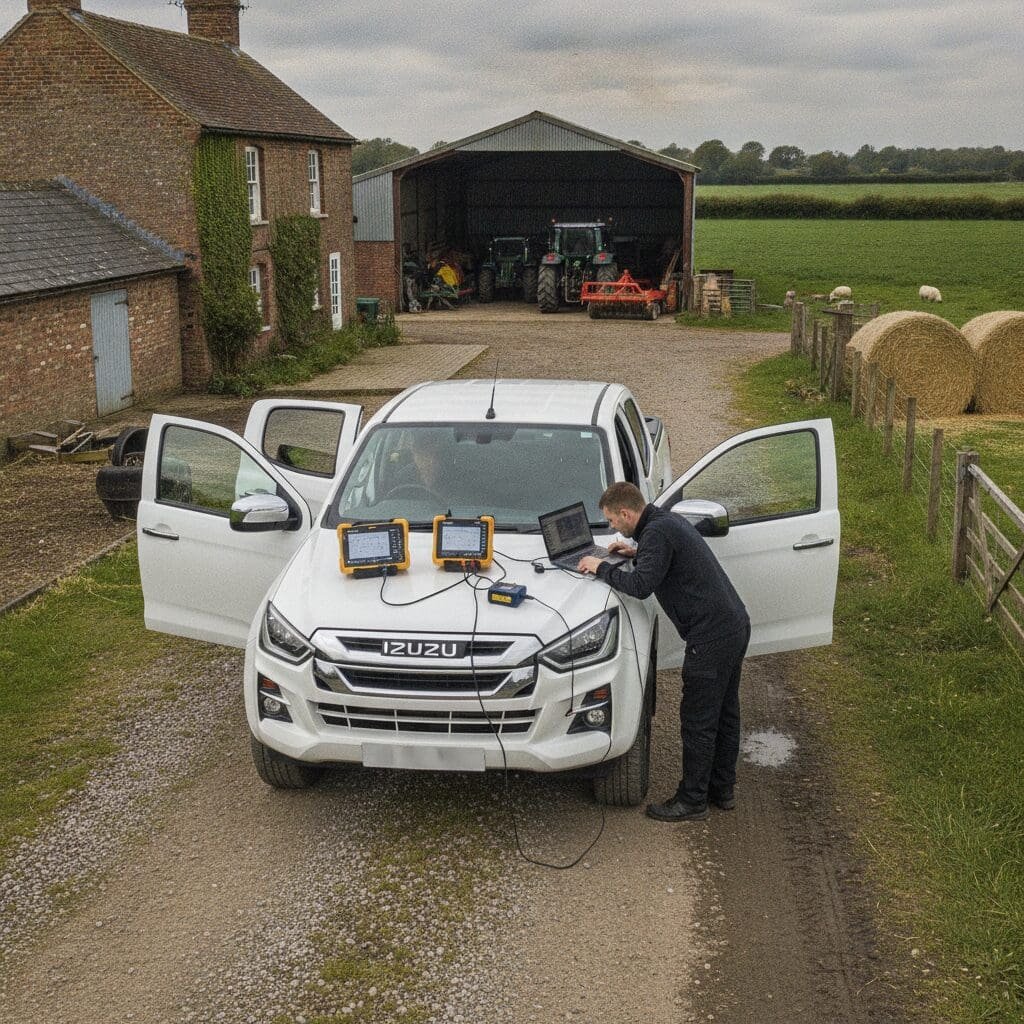
A basic code read that returns P207F and nothing else is not enough to identify the cause. A proper diagnostic session on the D-Max should show:
- Live AdBlue dosing data: Actual dosing volume versus calculated required volume. If the injector is under-delivering, this will show a shortfall on the live data — not just a stored code.
- Quality sensor voltage: A sensor fault presents as an out-of-range voltage reading, not just a concentration reading below threshold.
- NOx upstream and downstream: If NOx reduction efficiency is also below threshold, the SCR catalyst itself may be degraded — a different and more expensive problem.
- AdBlue pump pressure: Low pump pressure (often flagged as P20E8) can cause the injector to deliver under-pressure doses that do not atomise correctly, creating the same low-concentration effect at the catalyst without any actual concentration problem in the tank.
Without live data, you are guessing. Guessing wrong on a D-Max often means replacing the quality sensor (a low-cost part) when the actual problem is the injector or pump.
Fix Options and Costs
| Fix | Typical Cost (UK 2026) | Notes |
|---|---|---|
| Diagnostic scan (live data) | £80–£150 | Essential first step — confirms root cause |
| Injector clean/test | £80–£200 | Ultrasonic clean; may need replacement if blocked |
| Dosing injector replacement | £250–£500 | Parts + labour; D-Max access is straightforward |
| Quality sensor replacement | £150–£350 | Tank drop required on some D-Max variants |
| AdBlue tank flush + refill | £80–£160 | If contamination is confirmed |
| AdBlue delete | £250–£400 | Permanent ECU solution; removes all P207F risk |
When P207F Keeps Coming Back
The most frustrating pattern for D-Max owners is the code returning within days or weeks of being cleared. This almost always means the fault has not been properly diagnosed — the code was cleared without identifying and fixing the root cause.
Recurring P207F indicates one of: an injector that has been cleaned but is still deteriorating; a quality sensor that intermittently reports incorrectly; an ongoing fluid contamination source such as a bulk tank that has not been inspected; or a pump delivering borderline pressure as the pump seal ages.
If you have already had a repair attempt that did not hold, bring the diagnostic data from that session to a specialist. That data trail distinguishes genuine faults from misdiagnosed components. For D-Max owners who want a permanent resolution, our AdBlue resolution service covers full repair or software delete — mobile, across the East Midlands, Leicestershire, and surrounding areas.
D-Max P207F Fault — Mobile Fix Across the Midlands
We diagnose and fix AdBlue faults on Isuzu D-Max and other pickups at your location. Full live data diagnostics, injector testing, and permanent delete options available.
Frequently Asked Questions
What does P207F mean on an Isuzu D-Max?
P207F means the AdBlue quality sensor has detected that urea concentration is below the required 32.5% level (ISO 22241). On the D-Max this is most commonly caused by a partially blocked dosing injector under-delivering fluid, rather than bad-quality AdBlue. A full diagnostic scan with live dosing data is needed to confirm the root cause.
Why does P207F keep coming back on my D-Max after clearing?
Recurring P207F means the underlying fault has not been resolved — just hidden. Common causes of recurrence are an injector that has been cleaned but is still deteriorating, a quality sensor that fails intermittently under operating temperatures, or a contaminated bulk AdBlue source that was not checked. Live data diagnostics during fault-active conditions are needed to confirm which component is causing it.
Can bad AdBlue quality cause P207F on the Isuzu D-Max?
Yes, but it is less common than injector or sensor faults. Contaminated AdBlue stored incorrectly, mixed with water from an outdoor tank, or cross-contaminated with diesel can register as low concentration. ISO 22241 specifies exactly 32.5% urea in deionised water. If you use bulk storage tanks, test the fluid with a refractometer before replacing mechanical components.
How much does it cost to fix P207F on an Isuzu D-Max?
Costs depend on the root cause. A diagnostic scan runs £80 to £150. Injector cleaning or replacement is typically £200 to £500. If the fault is contaminated fluid needing a tank flush, the cost is lower. An AdBlue delete — which removes the SCR system from the ECU permanently — typically costs £250 to £400 and eliminates all future P207F faults on that vehicle.